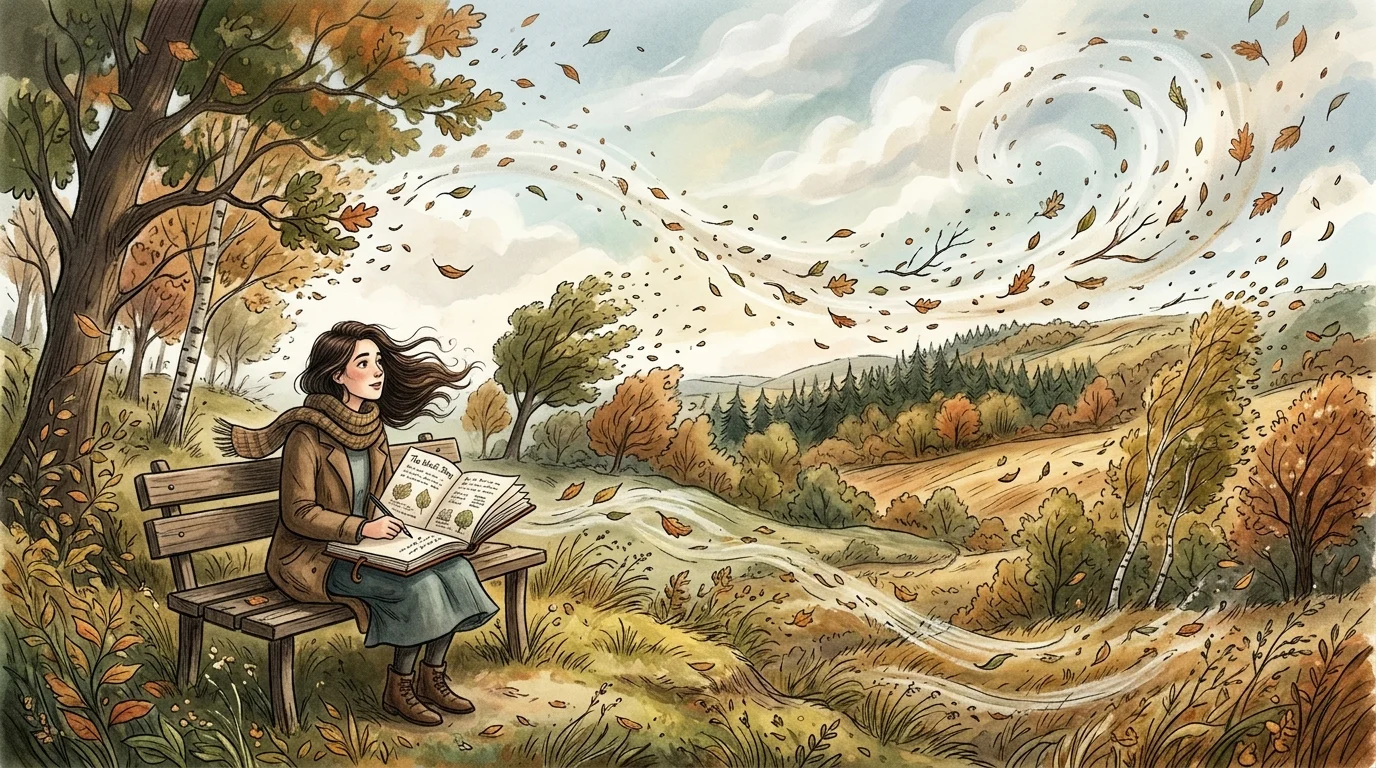
Wind is something we all feel but cannot see. That is why writers often compare it to other things. These comparisons help readers imagine the scene clearly.
Before we explore a metaphor for wind, it helps to understand a related idea: similes.
In simple terms, a simile compares two things using words like “as” or “like.” The meaning of similes is simple they help readers picture something better. For example, you might say “the wind moved like a whisper.” That small comparison makes the sentence more vivid.
Strong creative writing similes add life to stories, poems, and descriptions. They turn plain sentences into interesting ones. Instead of saying “the wind was strong,” you might say “the wind howled like a hungry wolf.”
In this guide, let’s explore examples of similes, how they work, and how you can use them in your own writing. You will see real simile sentences, learn their meanings, and even practice creating your own.
20 Strong Similes and Metaphor for Wind (With Meaning and Example Sentences)
Below are powerful creative writing similes that compare wind to familiar things. These help writers describe movement, sound, and feeling.
1. The wind howled like a hungry wolf
Meaning: The wind sounds loud and scary.
Explanation: Wolves howl loudly, so this simile shows a strong, wild wind.
Example sentences:
- The wind howled like a hungry wolf outside the cabin.
- At night, the wind howled like a hungry wolf across the empty fields.
2. The wind moved like a whisper
Meaning: The wind is soft and quiet.
Explanation: A whisper is gentle, so the wind feels calm.
Example sentences:
- The wind moved like a whisper through the tall grass.
- Evening came, and the wind moved like a whisper around the trees.
3. The wind ran like a wild horse
Meaning: The wind is fast and powerful.
Explanation: A wild horse moves quickly and freely.
Example sentences:
- The wind ran like a wild horse across the desert.
- Suddenly the wind ran like a wild horse through the valley.
4. The wind danced like a playful child
Meaning: The wind moves lightly and happily.
Explanation: Children move in fun, playful ways.
Example sentences:
- The wind danced like a playful child among the flowers.
- Leaves lifted as the wind danced like a playful child.
5. The wind roared like a lion
Meaning: The wind is very loud and strong.
Explanation: Lions roar loudly, showing power.
Example sentences:
- The wind roared like a lion during the storm.
- At night the wind roared like a lion around the house.
6. The wind rushed like a river
Meaning: The wind flows quickly and smoothly.
Explanation: Rivers move constantly and strongly.
Example sentences:
- The wind rushed like a river through the canyon.
- Cold air rushed like a river across the hills.
7. The wind cut like a knife
Meaning: The wind feels very cold and sharp.
Explanation: A knife cuts sharply, just like icy wind feels.
Example sentences:
- The winter wind cut like a knife against my face.
- Outside, the wind cut like a knife in the freezing night.
8. The wind sang like a flute
Meaning: The wind makes a musical sound.
Explanation: Air moving through objects can sound like music.
Example sentences:
- The wind sang like a flute through the trees.
- At dusk the wind sang like a flute around the hills.
9. The wind raced like a train
Meaning: The wind moves very fast and strongly.
Explanation: Trains travel quickly with force.
Example sentences:
- The wind raced like a train across the open field.
- Suddenly the wind raced like a train down the street.
10. The wind slipped like a shadow
Meaning: The wind moves quietly and unseen.
Explanation: Shadows move silently and softly.
Example sentences:
- The wind slipped like a shadow through the alley.
- Night came, and the wind slipped like a shadow through the town.
11. The wind cried like a lost child
Meaning: The wind sounds sad.
Explanation: The sound of wind can feel lonely.
Example sentences:
- The wind cried like a lost child outside the window.
- In the forest, the wind cried like a lost child.
12. The wind spun like a dancer
Meaning: The wind moves in circles.
Explanation: Dancers spin gracefully.
Example sentences:
- Leaves rose as the wind spun like a dancer.
- In the yard, the wind spun like a dancer around the trees.
13. The wind rushed like a crowd
Meaning: The wind comes quickly and strongly.
Explanation: A crowd can move suddenly together.
Example sentences:
- The wind rushed like a crowd through the narrow street.
- At the beach, the wind rushed like a crowd toward the shore.
14. The wind crept like a cat
Meaning: The wind moves slowly and quietly.
Explanation: Cats move softly without sound.
Example sentences:
- The wind crept like a cat through the garden.
- At night, the wind crept like a cat along the roof.
15. The wind burst like thunder
Meaning: The wind appears suddenly and loudly.
Explanation: Thunder is sudden and powerful.
Example sentences:
- The wind burst like thunder during the storm.
- Without warning, the wind burst like thunder across the hills.
16. The wind rolled like waves
Meaning: The wind moves in strong waves.
Explanation: Like ocean waves moving again and again.
Example sentences:
- The wind rolled like waves across the fields.
- Tall grass bent as the wind rolled like waves.
17. The wind fluttered like a bird
Meaning: The wind moves lightly and quickly.
Explanation: Birds flutter their wings quickly.
Example sentences:
- The wind fluttered like a bird through the leaves.
- The curtain moved as the wind fluttered like a bird.
18. The wind charged like a bull
Meaning: The wind is strong and aggressive.
Explanation: Bulls charge with power.
Example sentences:
- The wind charged like a bull during the storm.
- Suddenly the wind charged like a bull down the valley.
19. The wind flowed like silk
Meaning: The wind feels smooth and gentle.
Explanation: Silk is soft and smooth.
Example sentences:
- The warm wind flowed like silk across the beach.
- At sunset, the wind flowed like silk over the water.
20. The wind scattered leaves like confetti
Meaning: The wind spreads things everywhere.
Explanation: Confetti spreads in all directions.
Example sentences:
- The wind scattered leaves like confetti in the park.
- Autumn came and the wind scattered leaves like confetti.
Practice Section: Learn How to Use Similes in Writing
Let’s practice identifying and creating simile sentences.
1. Fill in the blank
The wind howled like a ______.
Answer: wolf
Explanation: Wolves howl loudly, like strong wind.
2. Identify the simile
“The wind moved like a whisper through the trees.”
Answer: like a whisper
Explanation: It compares wind to a whisper.
3. Complete the simile
The wind cut like a ______.
Answer: knife
Explanation: Sharp wind feels like a knife.
4. Which word shows the simile?
“The wind danced like a playful child.”
Answer: like
Explanation: Similes usually use like or as.
5. Finish the sentence
The wind roared like a ______.
Answer: lion
Explanation: Lions roar loudly like storm winds.
6. Identify the comparison
“The wind crept like a cat.”
Answer: wind compared to a cat
Explanation: Both move quietly.
7. Complete the simile
The wind ran like a ______ horse.
Answer: wild
Explanation: Wild horses move fast and freely.
8. Which sentence contains a simile?
A. The wind is strong
B. The wind raced like a train
Answer: B
Explanation: It compares wind to a train.
9. Create your own
The wind sang like ______.
Possible answer: a flute
Explanation: Wind can sound musical.
10. Identify the simile word
“The wind slipped like a shadow.”
Answer: like
Explanation: It signals the comparison.
Conclusion
Strong creative writing similes help readers see, hear, and feel your writing. Instead of plain descriptions, similes create vivid pictures. For example, saying “the wind roared like a lion” makes the scene much stronger than simply saying “the wind was loud.”
Now you have seen many examples of similes, their meanings, and real simile sentences. You also practiced how to use similes in writing.
The best way to improve is to create your own. The next time you describe wind, rain, or sound, try adding a simile. You might say something simple, fun, or surprising. Over time, these comparisons will make your writing more colorful and powerful.
Keep practicing, and soon your words will paint clear pictures for every reader.