The confusion between vender vs vendor is surprisingly common because both words exist in English and look nearly identical. However, they are not interchangeable in most situations. One is widely used in business and everyday communication, while the other is far less common and has a completely different meaning.
If you have ever wondered whether to write vender or vendor in emails, contracts, online stores, or professional writing, this guide will make the difference simple and easy to remember. You’ll learn meanings, examples, common mistakes, pronunciation tips, and American vs British English usage.
Quick Answer
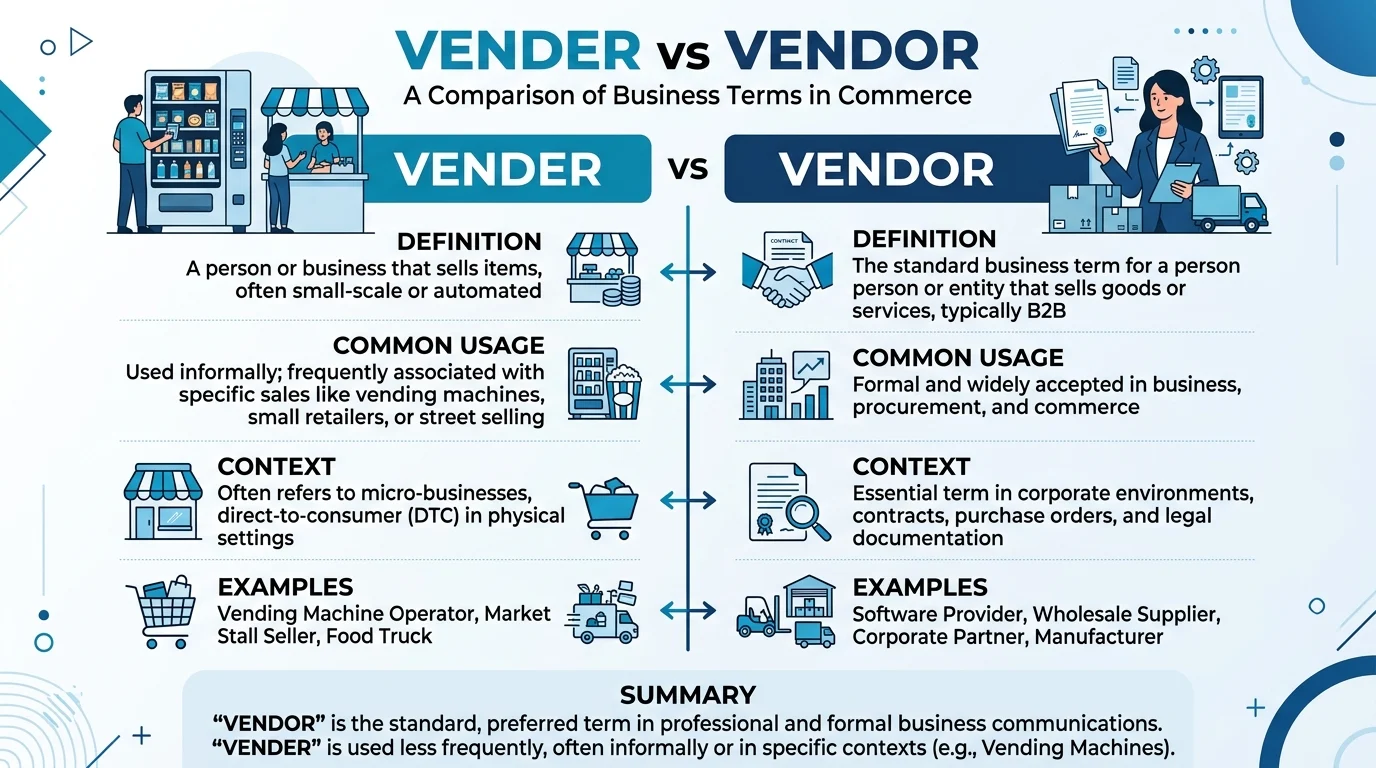
- Vendor = a person or company that sells goods or services
- Vender = someone who vends or dispenses something, but this spelling is rarely used today
In modern English, vendor is almost always the correct word in business, commerce, and professional writing.
Example:
- “The software vendor provided technical support.”
What Does Vendor Mean?
Business A vendor is a person, supplier, company, or business that sells products or services to customers or other businesses.
The word is extremely common in:
- Business contracts
- E-commerce
- Retail
- Technology
- Real estate
- Event management
Examples of Vendor
- The vendor delivered the products on time.
- We selected a new software vendor for our company.
- Street vendors sold snacks near the stadium.
- The wedding vendor handled decorations and catering.
Common Types of Vendors
Here are some examples of vendors in everyday life:
| Type | Example |
|---|---|
| Food Vendor | A person selling snacks at a market |
| Software Vendor | A company selling apps or programs |
| Retail Vendor | A wholesaler supplying stores |
| Event Vendor | A photographer or caterer |
| Online Vendor | A seller on an e-commerce platform |
What Does Vender Mean?
Vender is a real English word, but it is much less common. Traditionally, it refers to someone who vends or dispenses something.
In modern usage, the word has become rare because vendor replaced it in most contexts.
Examples of Vender
- A newspaper vender stood outside the station.
- The coin vender stopped working.
However, in today’s English, most native speakers would naturally use vendor or vending machine instead.
Vender vs Vendor: Main Difference
The biggest difference is popularity and modern usage.
| Feature | Vendor | Vender |
|---|---|---|
| Common Today | Yes | Rare |
| Main Meaning | Seller or supplier | One who vends |
| Used in Business | Very common | Almost never |
| Professional Usage | Standard | Outdated in many contexts |
| Preferred Spelling | Vendor | Rare alternative |
Why Vendor Is More Common
Marketing Over time, vendor became the standard spelling in business English because it sounds more formal and professional.
Today, you commonly see it in:
- vendor agreements
- vendor management
- approved vendor lists
- vendor payments
- third-party vendors
Large businesses, software companies, and legal documents almost always use vendor.
Common Mistakes People Make
Because the words are so similar, writers often confuse them.
Mistake 1: Using Vender in Professional Writing
Incorrect:
- “We hired a new IT vender.”
Correct:
- “We hired a new IT vendor.”
Why? Vendor is the accepted modern business term.
Mistake 2: Thinking Vender Is a Misspelling
Interestingly, vender is not technically wrong. It is simply outdated or uncommon in most contexts.
Mistake 3: Confusing Vendor With Vending
People sometimes assume vender must relate to vending machine. However, even there, English usually prefers:
- vending machine
- vendor machine company
- snack vendor
Real Life Examples of Vendor
Technology
Microsoft is a major software vendor.
E-Commerce
Amazon allows third-party vendors to sell products online.
Local Markets
Street vendors often sell fresh fruit and handmade items.
Weddings and Events
Event vendors may include:
- photographers
- caterers
- florists
- DJs
American vs British English Differences
Both American English and British English strongly prefer vendor.
American English
In United States English:
- Vendor is standard
- Vender is rarely used
British English
In United Kingdom English:
- Vendor is also the preferred spelling
- Vender appears occasionally in older texts
There is no major spelling distinction between the two dialects for this word.
Vendor in Business and Technology
Information Technology In modern business, the term vendor plays an important role.
Vendor Management
Companies often track:
- approved vendors
- vendor contracts
- vendor payments
- vendor performance
Software Vendors
Technology businesses depend heavily on software vendors for:
- cybersecurity tools
- cloud storage
- operating systems
- customer management software
Synonyms
Using related vocabulary improves both writing quality and SEO relevance.
Synonyms for Vendor
- seller
- supplier
- merchant
- retailer
- dealer
- distributor
Related Terms
- vending machine
- street vendor
- third-party vendor
- supplier agreement
- service provider
Easy Trick to Remember the Difference
A quick memory tip:
- Vendor = modern business word
- Vender = rare or old-fashioned form
If you are writing professionally, choose vendor almost every time.
FAQs
Is vendor the correct spelling?
Yes. Vendor is the standard and widely accepted spelling in modern English.
Is vender a real word?
Yes. Vender is a real but uncommon English word.
Which word should I use in business writing?
Use vendor in professional, legal, and business communication.
What is a software vendor?
A software vendor is a company that develops or sells software products or services.
Are vendor and supplier the same?
Not exactly. A vendor sells products or services, while a supplier provides goods to businesses, often in bulk.
Do Americans use vender?
Very rarely. Americans almost always use vendor.
Is vendor used in British English?
Yes. British English strongly prefers vendor as well.
What is a street vendor?
A street vendor sells goods or food in public places like markets or sidewalks.
Final Summary
The difference between vender vs vendor mainly comes down to modern usage and popularity. Vendor is the standard word used today for businesses, suppliers, retailers, and service providers. It appears in professional writing, contracts, technology, e-commerce, and everyday communication. Vender is technically correct but rare and largely outdated in modern English.
If you want your writing to sound natural, professional, and accurate, choose vendor in almost every situation. Remember: when talking about selling products or services in modern English, vendor is the trusted and preferred spelling.
Actionable Takeaway
Before writing the word, ask yourself:
- Am I referring to a seller, supplier, or business? → Use vendor
- Am I intentionally using an older or very rare form? → Possibly vender
For most people and businesses, vendor is the correct choice.