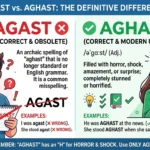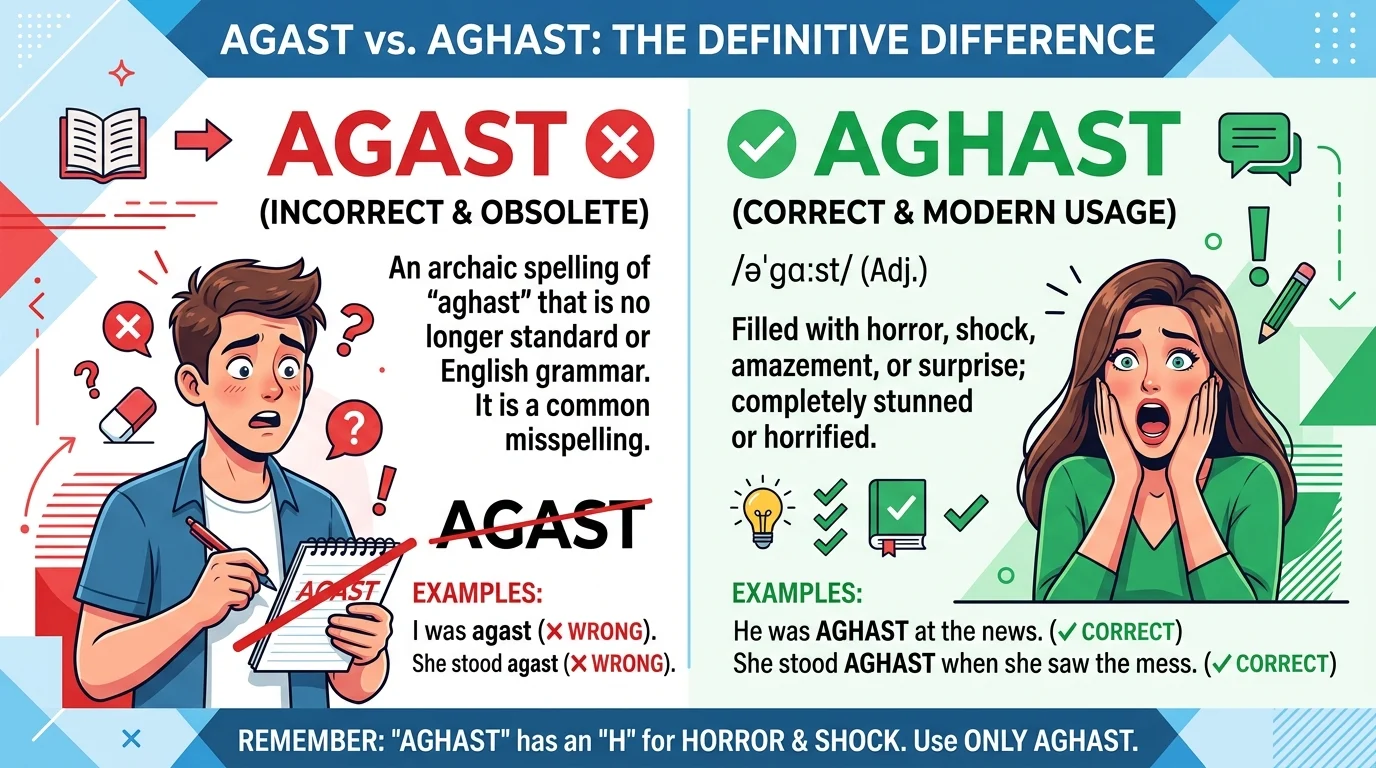
The confusion between agast vs aghast is a common spelling mistake in English. Because the word is not used every day and its pronunciation can be misleading, many people accidentally write agast instead of the correct spelling aghast.
If you’re unsure which form to use, this guide explains the correct spelling, meaning, examples, common mistakes, and helpful memory tricks.
Quick Answer
✅ Aghast is the correct spelling.
❌ Agast is incorrect.
Correct example:
- “She was aghast at the shocking news.”
Incorrect example:
- “She was agast at the shocking news.”
What Does Aghast Mean?
English Vocabulary Aghast is an adjective that describes a feeling of:
- shock
- horror
- amazement
- disbelief
It is often used when someone is extremely surprised by something unpleasant or unexpected.
Examples of Aghast
- The audience was aghast at the sudden announcement.
- He looked aghast when he saw the damage.
- Parents were aghast by the school’s decision.
- She was aghast at how quickly the situation changed.
Why Is “Agast” Incorrect?
The standard English spelling includes the letters:
- a-g-h-a-s-t
The spelling:
❌ agast
omits the “h” and is considered a misspelling.
Because the “h” is silent when spoken, many writers mistakenly leave it out.
Agast vs Aghast: Main Difference
| Word | Status | Meaning |
|---|---|---|
| Aghast | Correct spelling | Shocked, horrified, or astonished |
| Agast | Incorrect spelling | Common misspelling |
Common Uses of Aghast
Expressing Shock
- She was aghast at the unexpected outcome.
- They were aghast by the rising costs.
Reacting to Bad News
- The family was aghast after hearing the report.
- Investors were aghast at the market collapse.
Expressing Horror
- Witnesses were aghast at the scene.
- Citizens were aghast by the disaster.
Aghast in Literature and Writing
Literature The word aghast is often used in:
- novels
- journalism
- storytelling
- formal writing
because it vividly communicates strong emotional reactions.
Example
- “She stood aghast, unable to believe what she had seen.”
Synonyms for Aghast
Using related words can improve writing variety.
Common Synonyms
- shocked
- horrified
- stunned
- appalled
- astonished
- alarmed
Example
Instead of:
- “He was aghast.”
You could say:
- “He was stunned.”
Common Mistakes People Make
Mistake 1: Dropping the “H”
Incorrect:
- “I was agast.”
Correct:
- “I was aghast.”
Mistake 2: Spelling by Pronunciation
Since the “h” is silent, writers often omit it.
Mistake 3: Confusing It With Similar-Sounding Words
Because aghast is relatively uncommon, some people assume simpler spellings are correct.
American vs British English Differences
Both:
- United States American English
- United Kingdom British English
use the same spelling:
✅ aghast
❌ agast
There is no regional spelling difference.
Why Correct Spelling Matters
Professional Communication Correct spelling improves:
- readability
- professionalism
- credibility
- writing quality
Because aghast is often used in formal writing and storytelling, spelling it correctly helps maintain a polished tone.
Easy Trick to Remember the Correct Spelling
Think of the Hidden “H”
The word contains a silent h:
- aghast
Memory tip:
- A ghost can leave you aghast.
Both words contain:
- gh
This makes the spelling easier to remember.
Related Word Information
| Word Type | Example |
|---|---|
| Adjective | aghast |
| Adverb | aghastly (rare) |
| Related Noun | astonishment (similar meaning) |
Example Sentence
- “The crowd remained aghast after hearing the announcement.”
FAQs
Which spelling is correct: agast or aghast?
Aghast is the correct spelling.
Is agast a real word?
No. Agast is generally considered a misspelling of aghast.
What does aghast mean?
It means shocked, horrified, astonished, or filled with disbelief.
Why do people spell aghast as agast?
Because the “h” is silent in pronunciation, many people accidentally omit it.
Is aghast a formal word?
Yes. It is commonly used in formal writing, literature, and journalism.
Do British and American English spell aghast differently?
No. Both use aghast.
What is a synonym for aghast?
Common synonyms include shocked, horrified, stunned, and appalled.
Can spell-check catch agast?
Yes. Most spell-check programs identify agast as incorrect and suggest aghast.
Final Summary
The difference between agast vs aghast is simple. Aghast is the correct English word meaning shocked, horrified, astonished, or deeply surprised. Agast is a common misspelling caused by omitting the silent “h.”
Whether you’re writing fiction, journalism, academic content, or everyday communication, always use aghast. Remembering the hidden “gh” can help you avoid this mistake and write with greater confidence.
Actionable Takeaway
Before using the word, remember:
- aghast = correct spelling ✅
- agast = incorrect spelling ❌
For standard English writing:
- aghast ✅
- agast ❌
That quick spelling check will help you avoid this common error every time.