The confusion between cancell vs cancel is a common English spelling mistake. Many people accidentally add an extra “l” and write cancell, especially because related forms like cancelled and cancellation often contain double l letters in some varieties of English.
If you’re unsure whether to use cancell or cancel, this guide explains the correct spelling, meanings, examples, grammar rules, and common mistakes.
Quick Answer
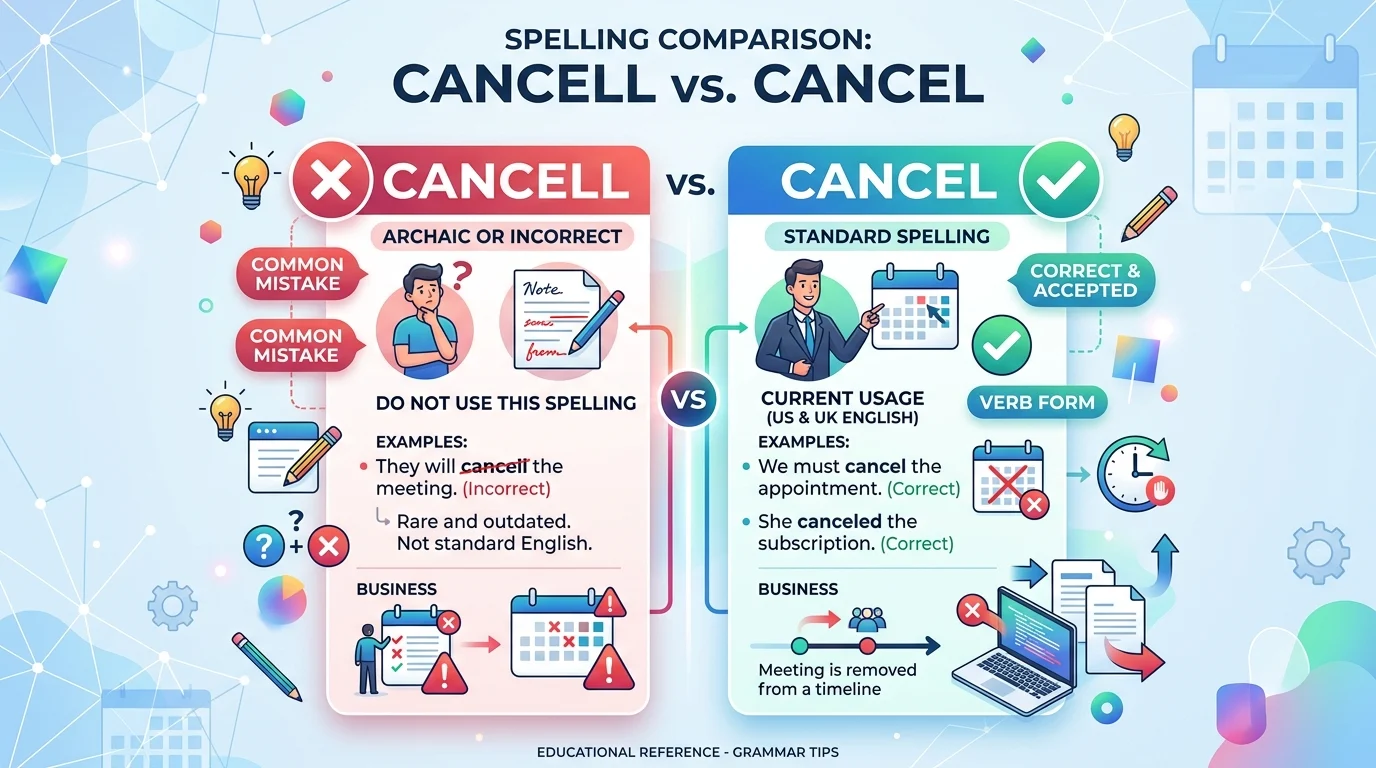
✅ Cancel is the correct spelling.
❌ Cancell is incorrect.
Correct example:
- “We may need to cancel the meeting.”
Incorrect example:
- “We may need to cancell the meeting.”
What Does Cancel Mean?
English Vocabulary Cancel is a verb that means:
- to call off something
- to stop a planned event
- to invalidate or revoke
- to end an arrangement before it happens
Examples of Cancel
- They decided to cancel the event.
- Please cancel my subscription.
- The airline canceled the flight.
- We had to cancel our plans because of the weather.
Why Is “Cancell” Incorrect?
The standard base form of the verb is:
✅ cancel
The spelling:
❌ cancell
is not recognized as a standard English word.
People often make this mistake because they see related forms such as:
- cancelled
- cancelling
- cancellation
and incorrectly assume the base verb must also contain two l letters.
Cancell vs Cancel: Main Difference
| Word | Status | Meaning |
|---|---|---|
| Cancel | Correct spelling | To call off, stop, or revoke |
| Cancell | Incorrect spelling | Common misspelling |
Common Uses of Cancel
Travel
Tourism
- Airlines sometimes cancel flights due to bad weather.
Business
Business
- Customers can cancel memberships.
Entertainment
Media Studies
- Networks occasionally cancel television shows.
Everyday Life
- We had to cancel dinner plans.
- She canceled her appointment.
Cancel in American vs British English
The base verb is the same in both varieties:
✅ cancel
However, some related forms differ.
| American English | British English |
|---|---|
| canceled | cancelled |
| canceling | cancelling |
| cancellation | cancellation |
So while both varieties use cancel, they may differ in certain derived forms.
Common Mistakes People Make
Mistake 1: Writing Cancell
Incorrect:
- “I want to cancell my order.”
Correct:
- “I want to cancel my order.”
Mistake 2: Confusing the Base Form With Past Tense Forms
Writers often see:
- cancelled
- cancelling
and mistakenly create:
- cancell
which is not a valid base form.
Mistake 3: Typing Errors
Fast typing can easily add an extra “l.”
Synonyms for Cancel
Using related vocabulary can improve writing variety.
Common Synonyms
- call off
- revoke
- terminate
- discontinue
- abandon
- withdraw
Example
Instead of:
- “They canceled the meeting.”
You could say:
- “They called off the meeting.”
Related Word Forms
| Word Type | Example |
|---|---|
| Verb | cancel |
| Past Tense (US) | canceled |
| Past Tense (UK) | cancelled |
| Noun | cancellation |
| Present Participle | canceling / cancelling |
Example Sentence
- “The cancellation occurred after the company decided to cancel the event.”
Why Correct Spelling Matters
Professional Communication Correct spelling improves:
- professionalism
- clarity
- readability
- credibility
Using cancell may make emails, reports, and business documents appear less polished.
Easy Trick to Remember the Correct Spelling
Think of the Base Verb
The word starts with:
- cancel
Only one l at the end.
Memory tip:
- cancel = one final l
- cancelled/cancelling = may use two l’s depending on the form and dialect
FAQs
Which spelling is correct: cancell or cancel?
Cancel is the correct spelling.
Is cancell a real word?
No. Cancell is considered a misspelling.
What does cancel mean?
It means to call off, stop, revoke, or terminate something.
Why do people write cancell?
Often because they confuse the base verb with forms like cancelled or cancelling.
Is cancel spelled differently in British English?
No. The base verb remains cancel in both British and American English.
Is it canceled or cancelled?
Both are correct, depending on the variety of English. American English typically uses canceled, while British English often uses cancelled.
What is the noun form of cancel?
The noun form is cancellation.
Can spell-check catch cancell?
Yes. Most spell-check tools identify cancell as incorrect and suggest cancel.
Final Summary
The difference between cancell vs cancel is straightforward. Cancel is the correct base verb meaning to call off, revoke, terminate, or stop something from happening. Cancell is a misspelling that often occurs because people confuse the base word with related forms such as cancelled and cancelling.
Whether you’re writing emails, travel plans, business documents, or everyday messages, always use cancel. Remember that the base form ends with just one l.
Actionable Takeaway
Before using the word, remember:
- cancel = correct spelling ✅
- cancell = incorrect spelling ❌
For proper English writing:
- cancel ✅
- cancell ❌
That simple spelling check will help you avoid this common mistake every time.