Have you ever wondered if the correct phrase is “make do” or “make due”? This is a common English mistake because the two phrases sound almost identical when spoken aloud. However, they have different meanings and are not interchangeable in standard English.
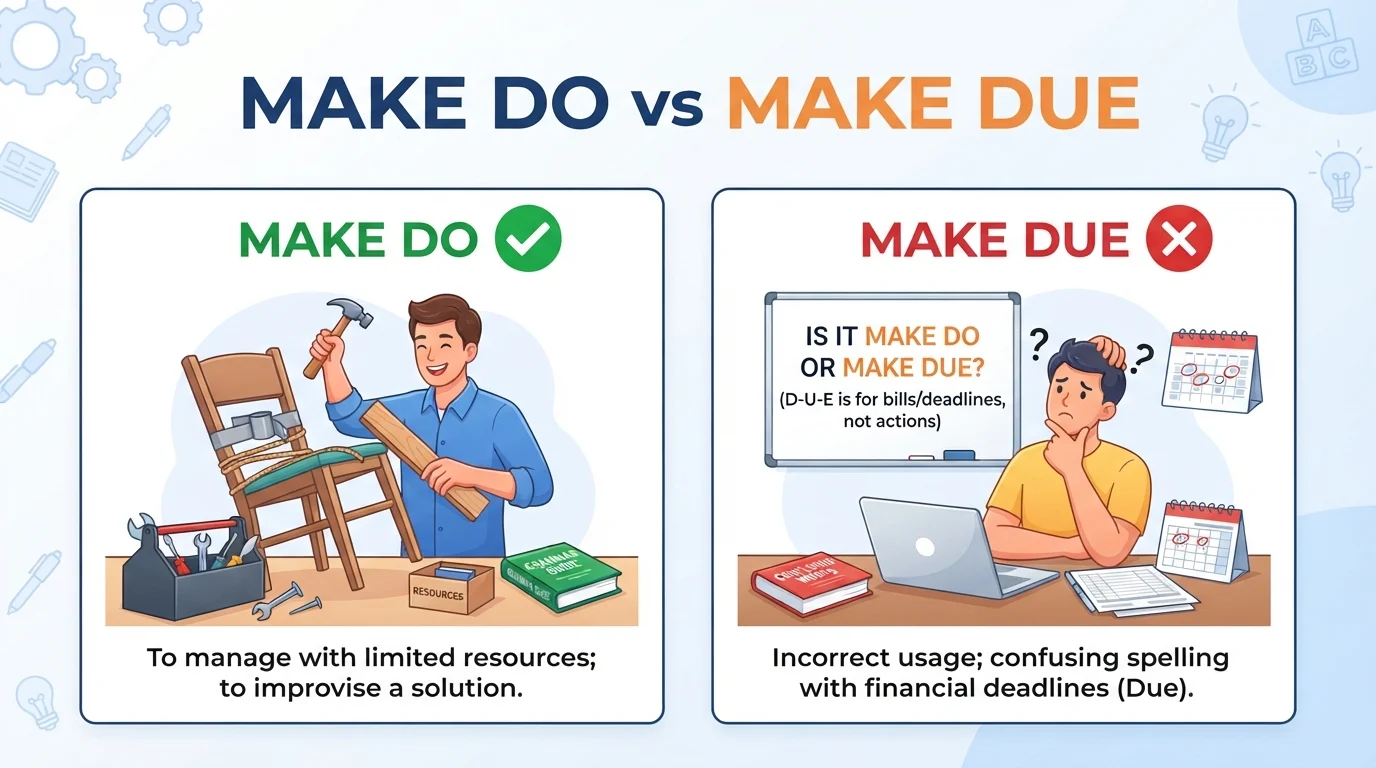
The correct phrase for managing with what you have is “make do.” The phrase “make due” is usually a spelling mistake when someone intends to write make do.
In this guide, you’ll learn the difference between make do vs make due, understand the meaning, see clear examples, learn common mistakes, and discover an easy way to remember the correct phrase.
Quick Answer
“Make do” is the correct phrase when you mean to manage with limited resources.
- ✅ Make do = To manage with what is available.
- ❌ Make due = Usually an incorrect spelling of make do.
Example:
- We don’t have the right tools, but we’ll make do with what we have.
- ❌ We’ll make due with what we have.
What Does “Make Do” Mean?
Make do is an idiomatic expression meaning to manage with something that is available, even if it is not ideal.
It often suggests adapting to a difficult or imperfect situation.
Examples:
- We didn’t have enough chairs, so we had to make do.
- I forgot my charger, so I’ll make do with a low battery.
- There was no hotel available, so we made do with a small guesthouse.
- We don’t have all the ingredients, but we can make do with what we have.
The phrase often appears in:
make do with something
Example:
- We had to make do with the old equipment.
What Does “Make Due” Mean?
Make due is generally considered an incorrect form when people intend to say make do.
The confusion occurs because do and due can sound similar in fast speech.
However, due is a separate word with meanings related to:
- something owed
- an expected time
- something scheduled
- an obligation
Examples:
- The payment is due tomorrow.
- The baby is due in June.
- The report is due on Friday.
These meanings are unrelated to the idiom make do.
Make Do vs Make Due
| Phrase | Meaning | Correct? | Example |
|---|---|---|---|
| Make do | Manage with what is available | ✅ Yes | We’ll make do with what we have. |
| Make due | Usually an incorrect form of “make do” | ❌ Usually no | ❌ We’ll make due with what we have. |
The key difference is:
Make do = manage with available resources
Due = owed, expected, or scheduled
How to Use “Make Do” Correctly
Use make do when you must use an imperfect solution because you do not have a better option.
Managing with Limited Supplies
- We ran out of paper, so we had to make do.
- There wasn’t enough food, but everyone made do.
Using an Imperfect Replacement
- My laptop broke, so I had to make do with my phone.
- We don’t have a proper table, so we’ll make do with this desk.
Adapting to a Difficult Situation
- The store was closed, so we made do with what we had.
- We couldn’t find a taxi, so we made do and walked home.
Common Expressions with “Make Do”
The most common structure is:
Make Do With
- make do with what you have
- make do with limited resources
- make do with less
- make do with an alternative
Examples:
- We had to make do with a smaller room.
- She learned to make do with limited equipment.
- They made do with the supplies available.
Make Do Without
You can also say make do without something.
Examples:
- We can make do without a car for a few days.
- He had to make do without his usual tools.
Common Mistakes
The most common mistake is writing make due instead of make do.
Incorrect:
- ❌ We’ll make due with what we have.
- ❌ She had to make due without a car.
- ❌ They made due with limited supplies.
Correct:
- ✅ We’ll make do with what we have.
- ✅ She had to make do without a car.
- ✅ They made do with limited supplies.
Easy Trick to Remember
Use this simple memory trick:
Do = perform or manage.
When you make do, you manage with what you have.
You can also remember:
Make do = make something work
Example:
- We don’t have the right equipment, but we’ll make do.
The word due is connected to things that are owed or expected:
- Payment is due.
- The assignment is due.
- The baby is due.
American vs British English
The phrase make do is standard in both American and British English.
Both varieties use:
- make do
- make do with
- make do without
Make due is generally considered an error when used to mean make do in both varieties of English.
Related Expressions
You can use these alternatives to make do:
- manage
- cope
- get by
- adapt
- work with what you have
- make the best of a situation
- improvise
- survive with limited resources
Examples:
- We’ll get by until the new equipment arrives.
- She had to improvise.
- We need to make the best of the situation.
Tips to Avoid This Mistake
Follow these simple strategies:
- Use make do when you mean manage.
- Remember that do relates to action and making something work.
- Use due for deadlines, payments, obligations, or expected events.
- Memorize the phrase make do with what you have.
- Proofread carefully because make due is a common spelling mistake.
Frequently Asked Questions
Which is correct: make do or make due?
Make do is correct when you mean to manage with what is available.
What does “make do” mean?
Make do means to manage with something, even when it is not ideal or when better options are unavailable.
Is “make due” ever correct?
In standard English, make due is generally not the correct spelling of the idiom. Use make do instead.
What is an example of “make do”?
We don’t have enough chairs, so we’ll make do with benches.
What is the difference between “make do” and “make the best of”?
Both can mean adapting to an imperfect situation. Make do emphasizes managing with limited resources, while make the best of emphasizes trying to create a positive outcome.
Why do people write “make due”?
Because do and due can sound similar, especially in fast speech.
Do American and British English use “make do” differently?
No. Make do is the standard expression in both American and British English.
Summary
When comparing make do vs make due, the correct phrase is make do when you mean to manage with what is available. For example, “We don’t have the right equipment, but we’ll make do with what we have.” The phrase make due is usually a spelling mistake caused by the similar pronunciation of do and due.
To remember the difference, connect do with action and managing. If you mean cope, adapt, or work with limited resources, use make do. Use due for deadlines, payments, obligations, and things that are expected.
Actionable Takeaway
Whenever you want to say “manage with what you have,” use make do. Remember the phrase “make do with what you have” and avoid the common mistake “make due.”