Have you ever wondered if the correct past tense of hang is hung or hanged? Both words are correct, but they are used in different situations.
This is one of those English grammar rules that seems confusing at first, yet becomes much easier once you understand the context.
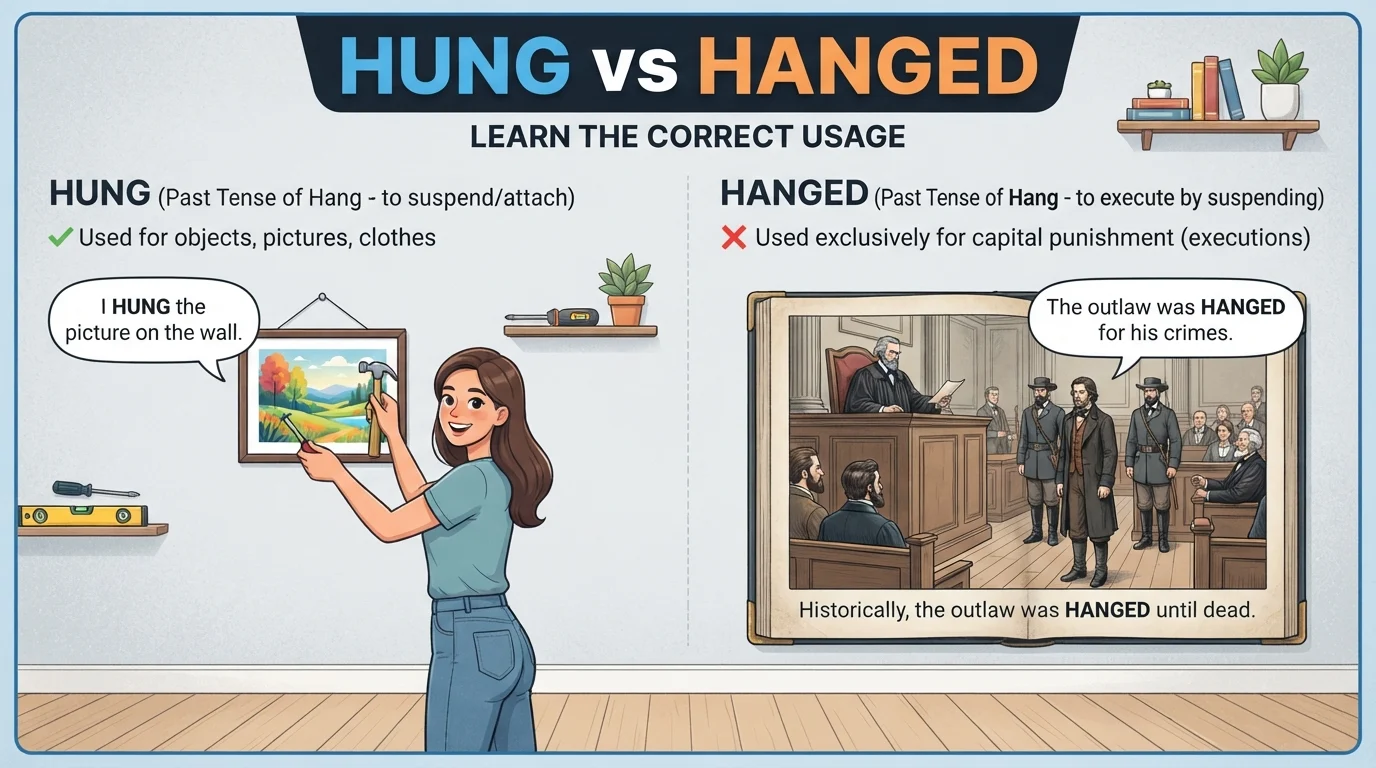
The main difference between hung vs hanged is simple: hung is generally used when something is suspended or displayed, while hanged is traditionally used when a person is executed by hanging.
Understanding this distinction can help you choose the right word in everyday writing, historical discussions, and formal English.
Quick Answer: Hung vs Hanged
Hung is usually used for objects that are suspended, displayed, or attached from above.
- She hung the picture on the wall.
- The coat was hung by the door.
Hanged is traditionally used for a person who was executed by hanging.
- The criminal was hanged for his crimes.
Easy memory trick
Pictures are hung. People are hanged.
This is the traditional rule to remember the difference.
What Does “Hung” Mean?
Hung is the past tense and past participle of hang when the meaning is to suspend, display, or attach something.
Examples of “hung”
- She hung the painting on the wall.
- I hung my coat by the door.
- We hung decorations around the room.
- He hung the curtains yesterday.
- The laundry was hung outside to dry.
In these examples, something is being suspended or placed in a particular position.
Hung for displaying something
Use hung when something is placed on a wall or displayed.
- The gallery hung several new paintings.
- We hung photographs throughout the hallway.
- The flag was hung outside the building.
Hung for suspending something
- She hung the lamp from the ceiling.
- He hung the bird feeder from a tree.
- The clothes were hung on a washing line.
What Does “Hanged” Mean?
Hanged is traditionally used when a person is executed by hanging.
Examples:
- The prisoner was hanged after being convicted of murder.
- Historical records state that the man was hanged for treason.
This use is usually associated with historical or legal contexts.
Important note about modern usage
In everyday modern English, hanged is relatively uncommon because execution by hanging is no longer a normal part of life in many English speaking countries. You will most often see it in historical writing, literature, news reports about historical events, or discussions of capital punishment.
Hung vs Hanged: The Main Difference
| Word | Main Use | Example |
|---|---|---|
| Hung | Suspended, displayed, or attached | She hung the picture. |
| Hanged | Executed by hanging | The prisoner was hanged. |
The simplest rule
Use hung for objects.
Use hanged for a person executed by hanging.
Hung vs Hanged Examples
Examples with “hung”
- She hung the picture above the fireplace.
- He hung his jacket on the hook.
- We hung decorations for the party.
- The curtains were hung yesterday.
- The clothes were hung outside to dry.
Examples with “hanged”
- The prisoner was hanged for his crimes.
- The historical figure was hanged in the seventeenth century.
- According to the records, he was hanged after the trial.
Common Mistakes With Hung and Hanged
Mistake 1: Using “hanged” for a picture
❌ She hanged the picture on the wall.
✅ She hung the picture on the wall.
A picture is displayed or suspended, so hung is correct.
Mistake 2: Using “hung” for an execution
❌ The prisoner was hung for his crimes.
✅ The prisoner was hanged for his crimes.
When referring specifically to execution by hanging, the traditional form is hanged.
Mistake 3: Assuming “hanged” is always wrong
Some people learn that the past tense of hang is always hung. That is not quite correct.
Both forms are used:
- Hung → suspended or displayed
- Hanged → executed by hanging
Hung vs Hanged in American and British English
The basic distinction is the same in American English and British English:
- Objects are generally hung.
- People executed by hanging are traditionally hanged.
However, language usage can vary slightly in historical, literary, or informal contexts. Some writers may use hung more broadly, but hanged remains the traditional and widely recognised form for execution.
A Simple Memory Trick for Hung vs Hanged
Remember this classic rule:
Pictures are hung, people are hanged.
Examples:
- The painting was hung in the museum.
- The prisoner was hanged after the trial.
The extra ed in hanged can help you remember that it is the special form used for execution.
Common Expressions With “Hung”
- Hung on the wall
- Hung by the door
- Hung from the ceiling
- Hung out to dry
- Hung decorations
- Hung a picture
Examples:
- The artwork was hung on the wall.
- She hung the clothes out to dry.
Related Expressions With “Hang”
The verb hang also appears in several common expressions.
Hang out
To spend time relaxing or socialising.
- We hung out at the park.
Hang on
To wait or hold tightly.
- Hang on for a minute.
Hang up
To end a phone call or place something on a hook.
- She hung up the phone.
- He hung up his coat.
These expressions use hung in the past tense:
- We hung out yesterday.
- She hung up the phone.
Quick Practice: Hung or Hanged?
Choose the correct word:
- She ______ the painting on the wall.
- The prisoner was ______ after being convicted.
- He ______ his coat by the door.
- They ______ decorations around the room.
- The historical figure was ______ for treason.
Answers
- hung
- hanged
- hung
- hung
- hanged
Why Are Hung and Hanged So Commonly Confused?
The confusion exists because hang has two different past-tense forms. Most irregular verbs have only one past form, but hang changes depending on its meaning.
For ordinary suspension or display, use hung.
For execution by hanging, use hanged.
The context usually makes the correct choice clear.
What is the difference between hung and hanged?
Hung is used when something is suspended, displayed, or attached. Hanged is traditionally used when a person is executed by hanging.
Is it “I hung the picture” or “I hanged the picture”?
The correct sentence is I hung the picture.
Is it “the prisoner was hung” or “the prisoner was hanged”?
When referring specifically to execution by hanging, the traditional and standard form is the prisoner was hanged.
Can “hung” be used for people?
Yes, in ordinary situations. For example: He hung his coat on the hook. The special form hanged is used for execution by hanging.
Why are there two past-tense forms of hang?
English developed different forms for the two meanings: hung for suspension and hanged for execution.
Is “hanged” still used today?
Yes, but it is most commonly found in historical, legal, literary, or discussions of capital punishment.
What is the easiest way to remember hung vs hanged?
Remember: Pictures are hung; people are hanged.
Do American and British English use hung and hanged differently?
The basic distinction is the same in both varieties of English.
Final Summary: Hung vs Hanged
The difference between hung vs hanged depends on the meaning of the verb hang. Use hung when something is suspended, displayed, or attached, as in “She hung the picture on the wall.” Use hanged when referring specifically to a person who was executed by hanging.
The easiest way to remember the rule is: Pictures are hung; people are hanged. Although hanged is less common in everyday modern English, it remains the traditional form for execution by hanging.
Actionable Takeaway
Use hung for objects that are suspended or displayed. Use hanged for a person executed by hanging. When in doubt, remember: Pictures are hung; people are hanged.