Have you ever wondered if the correct spelling is bussing or busing? Both spellings appear in English, which can make them confusing.
The answer depends on the meaning, the style guide you’re following, and if you’re referring to transportation or clearing tables in a restaurant.
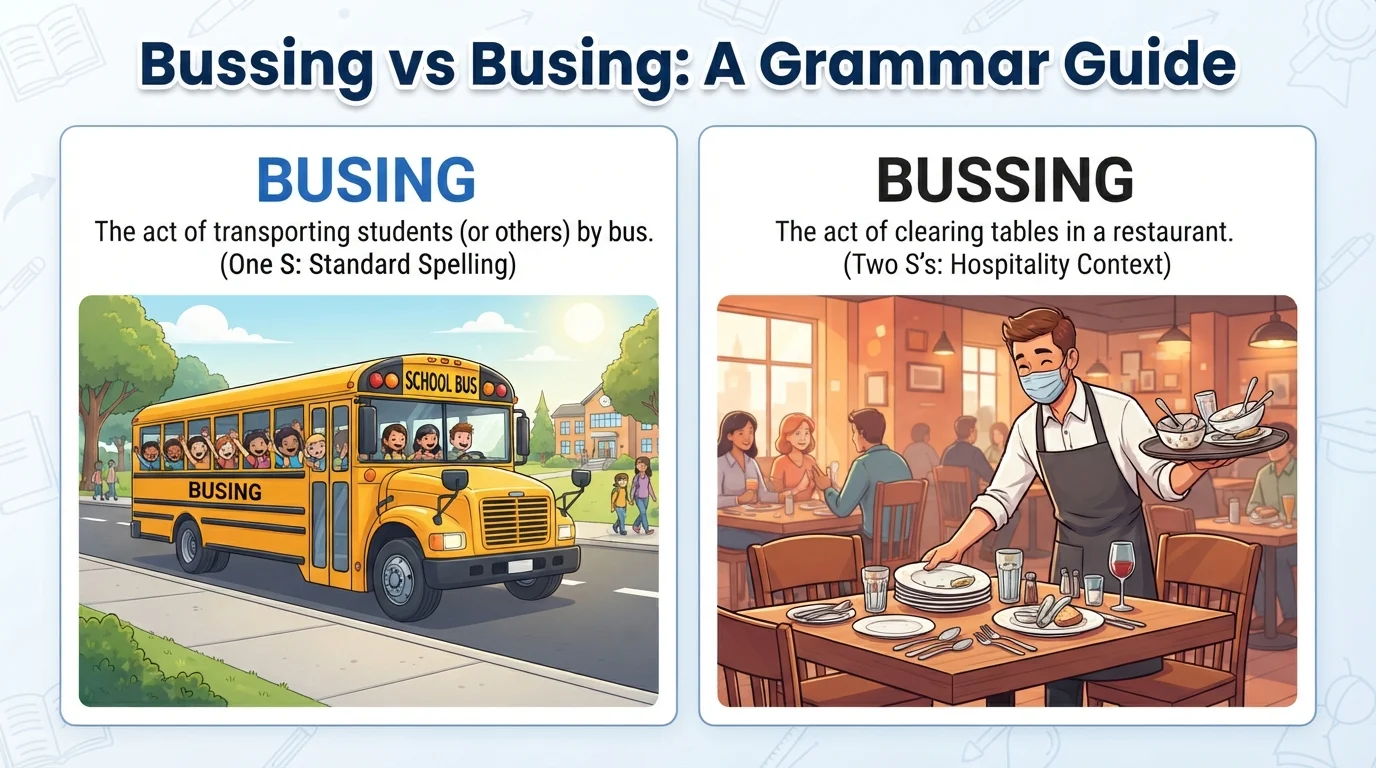
The difference between bussing vs busing is more than just one extra s. In modern English, busing is commonly used for transporting people by bus, while bussing is often used for clearing tables in restaurants. However, some dictionaries and style guides also accept bussing as the transportation spelling. Understanding the context will help you choose the correct form.
Quick Answer: Bussing vs Busing
Busing usually refers to transporting people by bus.
- The school is busing students to the museum.
Bussing is commonly used for clearing dishes and tables in restaurants.
- She is bussing tables during the lunch rush.
Some dictionaries also accept bussing for transportation, but busing is the preferred spelling in most modern style guides.
Easy memory trick
Bus + transport = busing.
Bus + restaurant tables = bussing.
What Does “Busing” Mean?
Busing is the present participle of the verb bus, meaning to transport people by bus.
It is commonly used in discussions about:
- School transportation
- Public transport
- Employee shuttles
- Travel by bus
Examples of “busing”
- The school is busing students to the sports event.
- The company is busing employees to the office.
- Visitors are busing between the hotels and the stadium.
- The council is busing passengers during railway maintenance.
- The charity is busing volunteers to the event.
Busing in education
One of the most common uses of busing relates to school transport.
Examples:
- The district is busing children from nearby villages.
- School busing reduces traffic around the campus.
What Does “Bussing” Mean?
Bussing commonly refers to clearing dishes, glasses, and cutlery from restaurant tables.
A person who performs this task is often called a busser in American English.
Examples of “bussing”
- She spent the evening bussing tables.
- He was bussing tables while the waiters served customers.
- The restaurant hired extra staff for bussing during weekends.
- They finished bussing the dining room before closing.
In restaurant settings, bussing is the spelling most readers expect.
Can “Bussing” Also Mean Transporting by Bus?
Yes. Some dictionaries recognise bussing as an alternative spelling of the verb meaning transporting by bus.
For example:
- The school is bussing students to another campus.
However, in modern published English, busing is generally preferred for transportation because it avoids confusion with restaurant bussing.
Bussing vs Busing: The Main Difference
| Word | Common Meaning | Example |
|---|---|---|
| Busing | Transporting people by bus | The school is busing students. |
| Bussing | Clearing restaurant tables | She is bussing tables. |
The simplest rule
Use busing when talking about transportation.
Use bussing when talking about restaurants and clearing tables.
Bussing vs Busing Examples
Examples with “busing”
- The school is busing students to the museum.
- The company is busing staff between offices.
- The city is busing passengers during roadworks.
- Emergency services are busing residents to shelters.
- The charity is busing visitors from the station.
Examples with “bussing”
- He spent the afternoon bussing tables.
- She enjoys bussing because it keeps her active.
- The restaurant needed help bussing after a busy evening.
- They hired extra workers for bussing duties.
- She started bussing tables while studying at university.
Common Mistakes With Bussing and Busing
Mistake 1: Using “bussing” for transportation in formal writing
Although some dictionaries allow it:
❌ The school is bussing students.
✅ The school is busing students.
Most modern style guides prefer busing for transportation.
Mistake 2: Using “busing” for restaurant work
❌ He spent the evening busing tables.
✅ He spent the evening bussing tables.
The restaurant meaning usually takes the double s.
Mistake 3: Assuming one spelling is always wrong
Both spellings exist in standard English. The correct choice depends on the meaning and the style guide you are following.
Bussing vs Busing in American and British English
Both American English and British English recognise the verb bus.
However, there are slight usage preferences.
American English
- Busing is usually preferred for transportation.
- Bussing is commonly used for clearing restaurant tables.
British English
British English follows similar patterns, although the verb bus is generally less common than expressions such as travel by bus or take the bus.
The distinction between busing and bussing is still widely recognised when the verb is used.
A Simple Memory Trick for Bussing vs Busing
Remember:
One S = School bus
Two Ss = Serving tables
Think of the extra s in bussing as standing for service in a restaurant.
Quick rule
Busing moves people. Bussing clears tables.
Related Words
Here are some related terms you may encounter:
Transportation
- Bus
- School bus
- Shuttle
- Coach
- Transit
- Public transport
Restaurant
- Busser
- Waiting tables
- Clearing tables
- Dining room
- Table service
- Restaurant staff
Using these related terms naturally can improve both your vocabulary and your understanding of context.
Quick Practice: Bussing or Busing?
Choose the correct word:
- The school is ______ students to the science centre.
- She spent the evening ______ tables.
- The company is ______ employees to the conference.
- They hired more staff for ______ duties in the restaurant.
- The council is ______ passengers during rail repairs.
Answers
- busing
- bussing
- busing
- bussing
- busing
Why Are Bussing and Busing So Commonly Confused?
The confusion comes from the fact that both spellings are recognised by dictionaries, and both originate from the verb bus.
Over time, writers began using busing for transportation to distinguish it from bussing, which became closely associated with restaurant work. Today, this distinction improves clarity and is followed by many newspapers, publishers, and style guides.
What is the difference between bussing and busing?
Busing usually means transporting people by bus, while bussing commonly means clearing tables in a restaurant.
Is bussing a correct spelling?
Yes. Bussing is a correct spelling, especially when referring to clearing restaurant tables. Some dictionaries also accept it for transportation.
Is busing a correct spelling?
Yes. Busing is the preferred spelling in most modern style guides when referring to transportation by bus.
Is it “busing students” or “bussing students”?
Both spellings may be accepted by some dictionaries, but busing students is the preferred form in most modern English writing.
Is it “bussing tables” or “busing tables”?
The preferred expression is bussing tables.
Do American and British English use these spellings differently?
Both varieties generally prefer busing for transportation and bussing for restaurant table-clearing, although usage may vary slightly by publisher or style guide.
Why do some dictionaries list both spellings?
Both spellings have historical use. Modern style guides often distinguish them to avoid confusion.
What is the easiest way to remember bussing vs busing?
Remember: One S moves people; two Ss serve tables.
Final Summary: Bussing vs Busing
The difference between bussing vs busing depends on context. Busing is the preferred spelling for transporting people by bus, especially in education, public transport, and formal writing. Bussing is commonly used for clearing tables in restaurants and hospitality settings.
Although both spellings may appear in dictionaries, using busing for transportation and bussing for restaurant work makes your writing clearer and aligns with the preferences of many modern style guides.
Actionable Takeaway
Use busing when referring to transporting people by bus. Use bussing when referring to clearing tables in a restaurant. This simple distinction will help your writing stay accurate and easy to understand.