Have you ever confused accept and except? These two words look and sound very similar, but they have completely different meanings. One is about receiving or agreeing to something, while the other means leaving something or someone out.
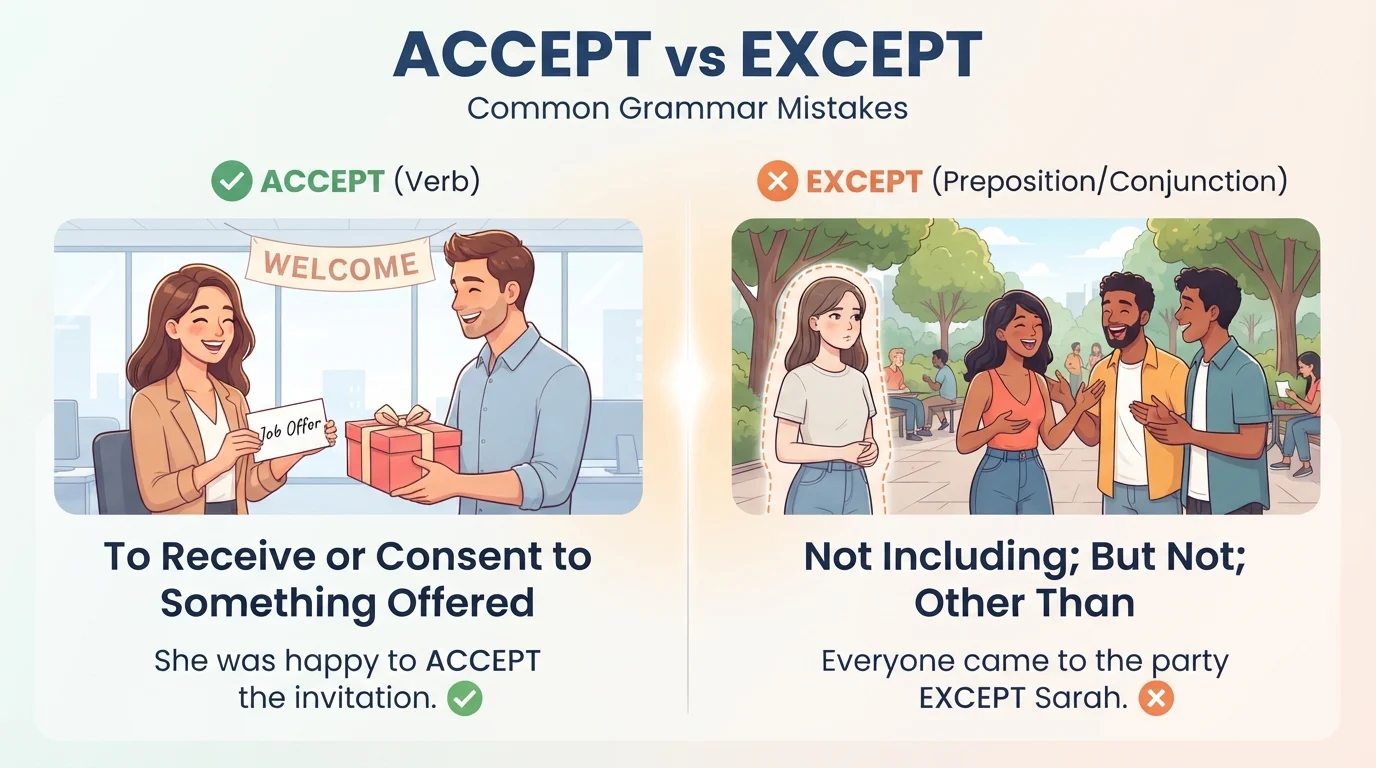
The difference between accept vs except is simple once you focus on the meaning. Accept is a verb meaning to receive, agree to, or approve something. Except usually means excluding or leaving out someone or something.
Learning this distinction can help you avoid one of the most common English grammar and spelling mistakes.
Quick Answer: Accept vs Except
Accept = to receive, agree to, or approve something.
- I accept your apology.
- She accepted the job offer.
Except = excluding or leaving out.
- Everyone came except John.
Easy memory trick
Accept = agree or receive.
Except = exclude.
Remember:
Accept something; except someone or something from a group.
What Does “Accept” Mean?
Accept is a verb with several related meanings.
Accept means to receive
You can accept something that someone offers, gives, or sends to you.
- She accepted the gift.
- He accepted the award.
- I accepted the invitation.
- They accepted the payment.
Accept means to agree
You can accept an idea, proposal, offer, or suggestion.
- We accepted their proposal.
- She accepted the terms of the agreement.
- He accepted the job offer.
- The company accepted our application.
Accept means to recognise something as true
Accept can also mean to acknowledge or recognise a situation.
- He finally accepted the truth.
- She accepted that the plan had failed.
- We must accept responsibility for our actions.
What Does “Except” Mean?
Except means excluding, apart from, or with the exception of.
It can be used as a preposition, conjunction, or verb.
Except as “excluding”
- Everyone was invited except Tom.
- I like all fruits except bananas.
- The shop is open every day except Sunday.
In each sentence, one person or thing is left out.
Except as “apart from”
- The room was empty except for a small table.
- I know everyone here except her.
- The road was clear except for a few fallen branches.
Accept vs Except: The Main Difference
| Word | Meaning | Example |
|---|---|---|
| Accept | Receive, agree to, or approve | She accepted the offer. |
| Except | Exclude or leave out | Everyone came except James. |
The simplest rule
Use accept when someone receives or agrees to something.
Use except when someone or something is left out.
Accept vs Except Examples
Examples with “accept”
- I accept your apology.
- She accepted the invitation.
- The bank accepted the payment.
- He accepted the challenge.
- We accept responsibility for the mistake.
Examples with “except”
- Everyone attended except Maria.
- I eat all vegetables except mushrooms.
- The museum is open every day except Monday.
- The box was empty except for a few papers.
- No one knew the answer except David.
Common Mistakes With Accept and Except
Mistake 1: Using “except” when you mean “receive”
❌ She excepted the award.
✅ She accepted the award.
You receive an award, so accepted is correct.
Mistake 2: Using “accept” when you mean “exclude”
❌ Everyone came accept John.
✅ Everyone came except John.
John was left out, so except is correct.
Mistake 3: Confusing “accept” with “agree”
Accept can mean agree to something:
- She accepted the offer.
But except never means agree or receive.
Mistake 4: Confusing “except” with “expect”
Another common mistake is confusing except and expect.
- Except = excluding
- Expect = believe something will happen
Examples:
- Everyone came except John.
- I expect John to arrive soon.
Accept vs Except vs Expect
These three words are often confused because they sound similar.
| Word | Meaning | Example |
| Accept | Receive or agree | I accept your offer. |
| Except | Exclude or leave out | Everyone came except Sarah. |
| Expect | Believe something will happen | I expect Sarah to arrive. |
Easy way to remember them
- Accept = agree or receive
- Except = exclude
- Expect = anticipate
Accept and Except in American and British English
The meanings and spellings of accept and except are the same in American English and British English.
Both varieties use:
- Accept = receive, agree to, or approve
- Except = excluding or leaving out
Pronunciation may vary slightly by accent, but the grammar and spelling rules remain the same.
A Simple Memory Trick for Accept vs Except
Remember the first letters:
Accept = Agree
Both accept and agree begin with the idea of saying yes.
- I accept your offer.
- I agree to your proposal.
Except = Exclude
The ex- in except can remind you of exclude.
- Everyone came except John.
- John was excluded from the group.
Quick rule
Accept means yes; except means leave out.
Common Expressions With “Accept”
- Accept an offer
- Accept an invitation
- Accept responsibility
- Accept an apology
- Accept a gift
- Accept a challenge
- Accept the truth
- Accept payment
Examples
- She accepted the invitation.
- He accepted responsibility for the mistake.
- I accept your apology.
Common Expressions With “Except”
- Everyone except…
- All except…
- Nothing except…
- No one except…
- Except for…
Examples
- Everyone except James attended.
- I eat all vegetables except spinach.
- The room was empty except for a chair.
- No one except the manager knew the truth.
Quick Practice: Accept or Except?
Choose the correct word:
- I ______ your apology.
- Everyone came ______ Sarah.
- She ______ the job offer.
- The shop is open every day ______ Sunday.
- He ______ responsibility for the mistake.
Answers
- accept
- except
- accepted
- except
- accepted
Why Are Accept and Except So Commonly Confused?
The words accept and except are commonly confused because they look and sound very similar. The main difference is the vowel sound in the first syllable and, more importantly, their meanings.
A useful way to check your choice is to ask:
Am I talking about receiving, agreeing, or approving something?
Use accept.
Am I leaving someone or something out?
Use except.
What is the difference between accept and except?
Accept means to receive, agree to, or approve something. Except means excluding or leaving someone or something out.
Is it “I accept your apology” or “I except your apology”?
The correct phrase is I accept your apology.
Is it “everyone accept John” or “everyone except John”?
The correct phrase is everyone except John.
What is the difference between accept and expect?
Accept means receive or agree to something. Expect means believe something will happen.
Can accept mean agree?
Yes. For example: She accepted the offer means she agreed to the offer.
Can except be used as a verb?
Yes, although this use is less common. Except can mean to exclude someone or something.
What is an easy way to remember accept and except?
Remember: Accept = agree or receive; except = exclude or leave out.
Do American and British English use accept and except differently?
No. The meanings, spellings, and basic grammar rules are the same in both varieties of English.
Final Summary: Accept vs Except
The difference between accept vs except is easy to remember. Accept is a verb meaning to receive, agree to, approve, or recognise something. For example, “I accept your apology” or “She accepted the job offer.”
Except means excluding or leaving out someone or something. For example, “Everyone attended except John.” The best memory trick is simple: Accept means yes; except means leave out.
Actionable Takeaway
Use accept when you mean receive, agree to, or approve. Use except when you mean exclude, leave out, or apart from. If you can replace the word with agree or receive, choose accept. If you can replace it with exclude or apart from, choose except.