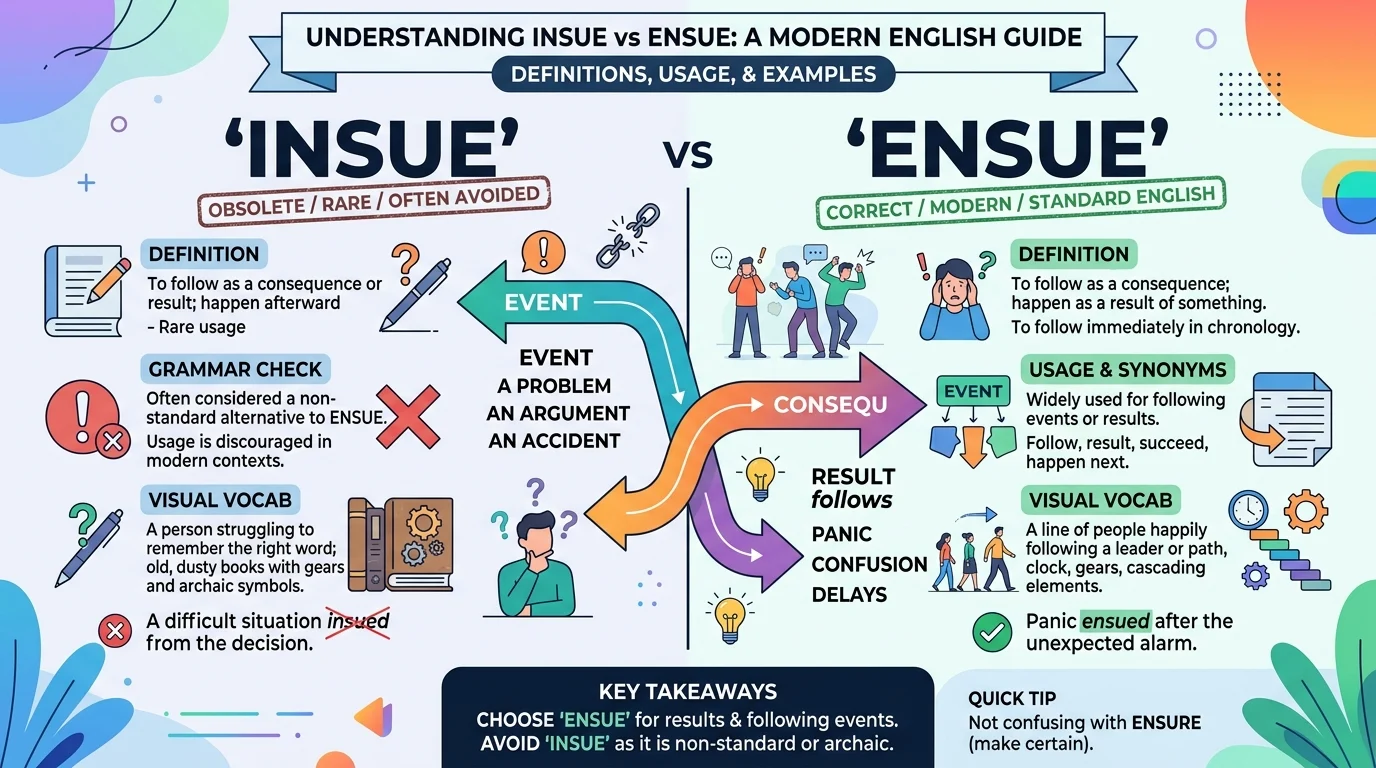
The confusion between insue vs ensue is a common English spelling mistake. Because the word ensue is not used as frequently as many everyday verbs, people often misspell it as insue. However, only one spelling is correct in modern English.
If you’re unsure whether to write insue or ensue, this guide explains the correct spelling, meaning, examples, grammar rules, and common mistakes.
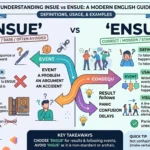
Quick Answer
✅ Ensue is the correct spelling.
❌ Insue is incorrect.
Correct example:
- “A heated debate ensued after the announcement.”
Incorrect example:
- “A heated debate insued after the announcement.”
What Does Ensue Mean?
English Vocabulary Ensue is a verb that means:
- to happen afterward
- to occur as a result of something
- to follow as a consequence
It is often used to describe events that happen immediately after another event.
Examples of Ensue
- Chaos ensued after the power outage.
- Several questions ensued following the presentation.
- A long discussion ensued.
- Protests ensued after the decision was announced.
Why Is “Insue” Incorrect?
The spelling insue is not recognized in standard English dictionaries.
People commonly make this mistake because:
- the pronunciation can be misleading
- they confuse the prefix en- with in-
- the word is relatively uncommon in everyday writing
However, the correct spelling is always:
✅ ensue
❌ insue
Insue vs Ensue: Main Difference
| Word | Status | Meaning |
|---|---|---|
| Ensue | Correct spelling | To happen afterward or as a result |
| Insue | Incorrect spelling | Common misspelling |
Common Uses of Ensue
News Reporting
Journalism
- Protests ensued after the announcement.
- Confusion ensued during the evacuation.
Business
Business
- Negotiations ensued following the proposal.
Legal and Political Contexts
Political Science
- Legal action ensued after the dispute.
- Debate ensued in parliament.
Everyday Situations
- Laughter ensued after the joke.
- An argument ensued between the neighbors.
How Ensue Is Used in Sentences
The word usually appears after an event and describes what followed.
Examples
- The alarm sounded, and panic ensued.
- The announcement was made, and applause ensued.
- The misunderstanding led to confusion that ensued for several days.
Synonyms for Ensue
Using related words can improve writing variety.
Common Synonyms
- follow
- result
- occur
- happen
- arise
- develop
Example
Instead of:
- “Chaos ensued.”
You could say:
- “Chaos followed.”
Common Mistakes People Make
Mistake 1: Writing Insue
Incorrect:
- “Several problems insued.”
Correct:
- “Several problems ensued.”
Mistake 2: Confusing Ensue With Issue
The words look somewhat similar but have completely different meanings.
Mistake 3: Using the Wrong Tense
Remember:
- ensue → present tense
- ensued → past tense
Examples
- Trouble may ensue.
- Trouble ensued.
Word Forms of Ensue
| Form | Example |
|---|---|
| Base Verb | ensue |
| Past Tense | ensued |
| Present Participle | ensuing |
| Third Person Singular | ensues |
Examples
- A dispute ensues.
- A dispute ensued.
- The ensuing discussion lasted hours.
American vs British English Differences
Both:
- United States American English
- United Kingdom British English
use the same spelling:
✅ ensue
❌ insue
There is no regional spelling difference.
Why Correct Spelling Matters
Professional Communication Correct spelling improves:
- credibility
- readability
- professionalism
- writing accuracy
Because ensue often appears in formal writing, spelling errors can stand out more noticeably.
Easy Trick to Remember the Correct Spelling
Think of “End Result”
Both words begin with:
- en
Memory tip:
- ensue = something that follows afterward
Remember:
- ensue starts with en
- not in
Related Word Forms
| Word Type | Example |
|---|---|
| Verb | ensue |
| Past Tense | ensued |
| Adjective | ensuing |
Example Sentence
- “The ensuing investigation revealed additional facts.”
FAQs
Which spelling is correct: insue or ensue?
Ensue is the correct spelling.
Is insue a real word?
No. Insue is considered a misspelling.
What does ensue mean?
It means to happen afterward or as a consequence of something.
How do you use ensue in a sentence?
Example: “A lengthy discussion ensued after the presentation.”
What is the past tense of ensue?
The past tense is ensued.
What does ensuing mean?
Ensuing means following or occurring afterward.
Do British and American English spell ensue differently?
No. Both use ensue.
Can spell-check catch insue?
Yes. Most spell-check tools identify insue as incorrect and suggest ensue.
Final Summary
The difference between insue vs ensue is straightforward. Ensue is the correct English verb meaning to happen afterward, follow as a consequence, or occur as a result of another event. Insue is simply a misspelling and should be avoided in all forms of writing.
Whether you’re writing news articles, academic papers, business reports, or everyday content, always use ensue. Remembering that it begins with en- can help you avoid this common spelling mistake.
Actionable Takeaway
Before using the word, remember:
- ensue = happen afterward ✅
- insue = incorrect spelling ❌
For proper English writing:
- ensue ✅
- insue ❌
That simple spelling check will help you avoid the mistake every time.