If you’ve seen both rehireable and rehirable in job applications, HR documents, or workplace discussions, you may wonder which spelling is correct. Since both versions appear online, the confusion is understandable. However, one spelling is generally preferred in professional and business writing.
This guide explains the difference between rehireable vs rehirable, their meanings, examples, common mistakes, and the spelling most employers and HR professionals use.
Quick Answer
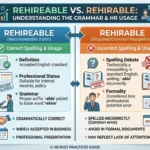
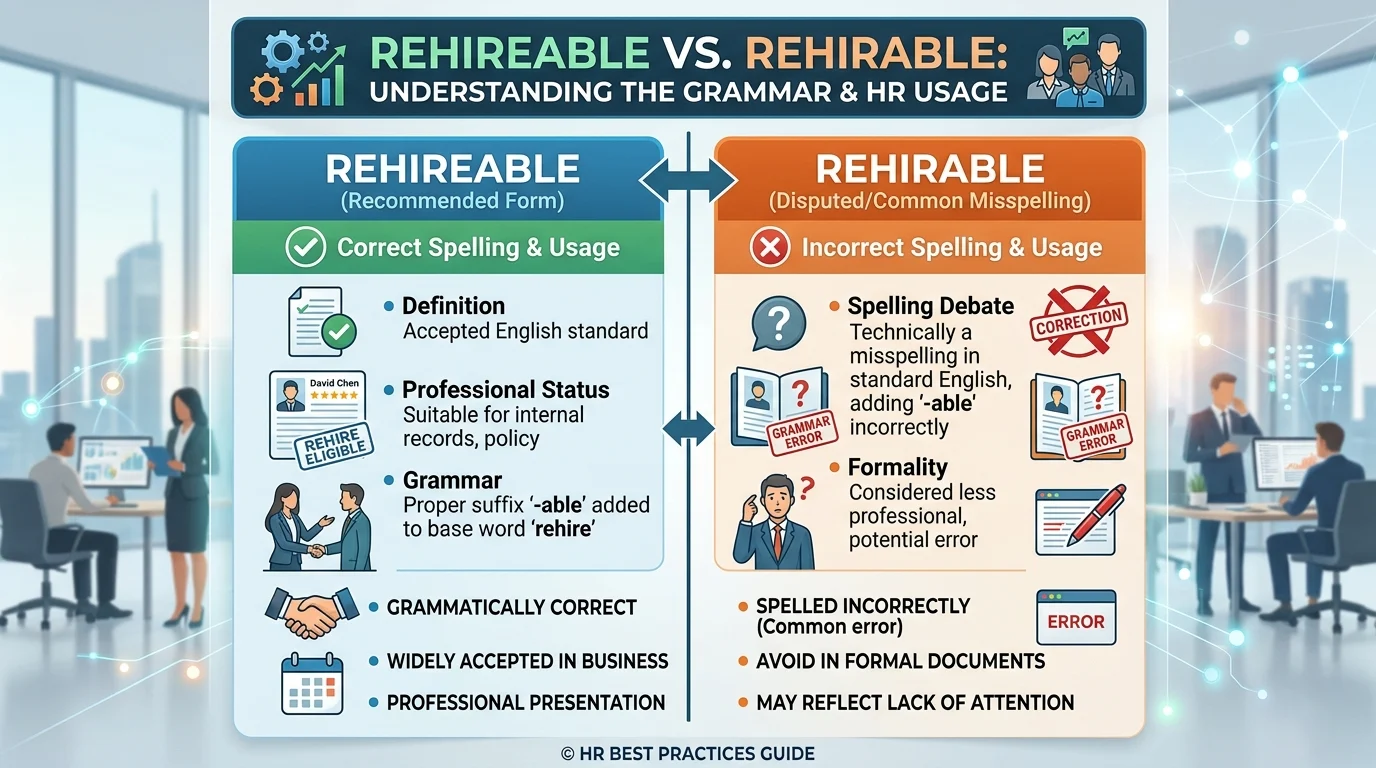
✅ Rehirable is the preferred and standard spelling.
⚠️ Rehireable is sometimes used but is generally considered a nonstandard variant.
Preferred example:
- “The employee left on good terms and is rehirable.”
Less preferred example:
- “The employee is rehireable.”
For professional writing, HR records, and workplace communication, rehirable is usually the better choice.
What Does Rehirable Mean?
Human Resources Rehirable is an adjective that means:
- eligible to be hired again
- suitable for future employment with a former employer
- approved for reemployment
Employers often use this term when evaluating former employees who may return to the organization.
Examples of Rehirable
- She is considered rehirable after leaving the company professionally.
- HR marked the former employee as rehirable.
- Workers who resign with proper notice are often rehirable.
- The manager noted that he would be rehirable in the future.
Why Is Rehirable Preferred?
The preferred spelling follows a common English word-formation rule: when adding -able, the final e is often dropped.
Similar Examples
| Base Word | Preferred Form |
|---|---|
| admire | admirable |
| desire | desirable |
| hire | hirable |
| rehire | rehirable |
Because of this pattern, rehirable is generally considered the standard spelling.
Rehireable vs Rehirable: Comparison Table
| Word | Correctness | Usage |
|---|---|---|
| Rehirable | ✅ Preferred | Common in HR and business writing |
| Rehireable | ⚠️ Less preferred | Occasionally seen but less standard |
How Rehirable Is Used in the Workplace
Human Resources
HR departments may indicate whether a former employee can return to the company.
Example:
- The employee’s file shows that she is rehirable.
Employment Verification
Future employers sometimes ask whether a former worker is eligible for rehire.
Example:
- The company confirmed he was rehirable.
Exit Interviews
Managers often assess whether departing employees should be considered for future opportunities.
Example:
- She remained rehirable because she left on good terms.
Factors That Make Someone Rehirable
Employees are often considered rehirable when they:
- resign professionally
- provide proper notice
- maintain good performance
- follow workplace policies
- leave on positive terms
Example
- The employee relocated for family reasons and remained fully rehirable.
Reasons an Employee May Not Be Rehirable
Organizations may classify someone as not rehirable due to:
- misconduct
- policy violations
- poor performance
- repeated disciplinary issues
- termination for serious cause
Each employer has its own policies regarding rehire eligibility.
Common Mistakes People Make
Mistake 1: Assuming Rehireable Is the Standard Form
While it appears in some documents, rehirable is more widely accepted.
Mistake 2: Confusing Rehirable and Rehired
These words have different meanings.
| Word | Meaning |
|---|---|
| Rehirable | Eligible for future rehire |
| Rehired | Already hired again |
Examples
- She is rehirable. ✅
- She was rehired last year. ✅
Mistake 3: Ignoring Professional Style Preferences
Most HR and business writing favors rehirable for consistency.
Synonyms for Rehirable
Depending on the context, you can use:
- eligible for rehire
- eligible for reemployment
- suitable for reemployment
- approved for future employment
- qualified for rehiring
Example
Instead of:
- “The worker is rehirable.”
You could say:
- “The worker is eligible for rehire.”
American vs British English Differences
Both:
- United States American English
- United Kingdom British English
generally favor:
✅ rehirable
There is no major regional difference in preference.
Why Correct Spelling Matters
Professional Communication Using the standard spelling helps improve:
- professionalism
- consistency
- clarity
- credibility
This is especially important in HR records, employee handbooks, and employment verification documents.
Easy Trick to Remember the Correct Spelling
Think of “Hirable”
The word follows the same pattern:
- hire → hirable
- rehire → rehirable
Memory tip:
If hirable drops the final e, rehirable does too.
Related Word Forms
| Word | Meaning |
|---|---|
| Rehire | To hire again |
| Rehired | Hired again |
| Rehiring | The process of hiring again |
| Rehirable | Eligible to be hired again |
Example Sentences
- The company may rehire former employees.
- She was rehired after two years.
- Rehiring experienced staff can reduce training costs.
- He remains rehirable.
FAQs
Which spelling is correct: rehireable or rehirable?
Rehirable is the preferred and more widely accepted spelling.
Is rehireable wrong?
It is not always treated as completely wrong, but it is generally considered less standard than rehirable.
What does rehirable mean?
It means eligible to be hired again by a former employer.
Is rehirable commonly used in HR?
Yes. HR professionals often use it to indicate reemployment eligibility.
What is the difference between rehirable and rehired?
Rehirable means eligible for future employment, while rehired means already employed again.
Why is the final “e” removed?
English commonly drops a final e before adding -able, as in desirable and admirable.
Do American and British English use different spellings?
No. Both generally prefer rehirable.
Which spelling should I use in professional documents?
Use rehirable for the most widely accepted and professional form.
Final Summary
The difference between rehireable vs rehirable is mainly a matter of spelling convention. While both versions can be found online, rehirable is the preferred spelling because it follows the standard English pattern of dropping the final e before adding -able.
Whether you’re writing HR policies, employment records, or workplace communications, choosing rehirable will make your writing look more professional and consistent.
Actionable Takeaway
Remember this simple rule:
- rehirable = preferred spelling ✅
- rehireable = less preferred spelling ⚠️
For professional HR and business writing:
- rehirable employee ✅
- rehireable employee ⚠️
When in doubt, use rehirable.