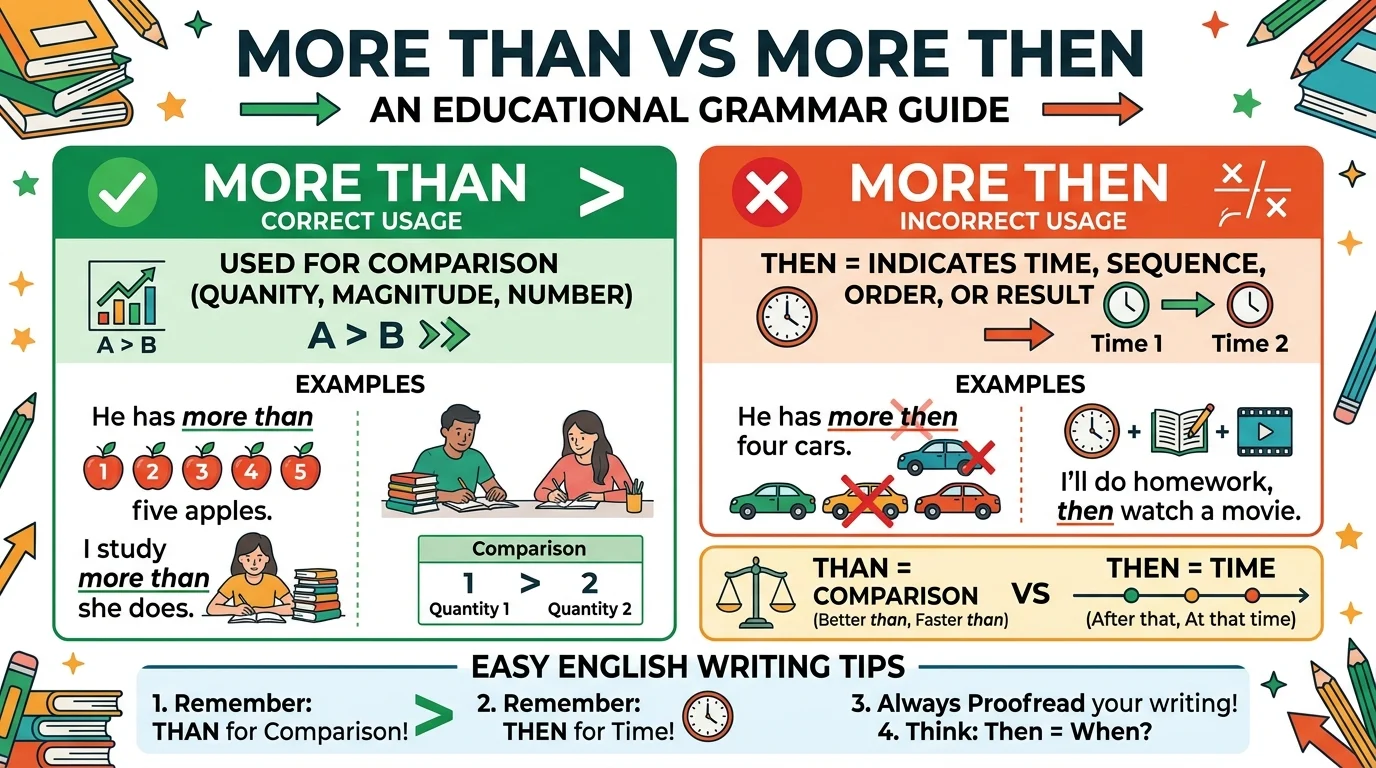
The confusion between more then vs more than is one of the most common grammar mistakes in English. Since then and than sound similar in casual speech, many people accidentally use the wrong word while writing emails, essays, text messages, or social media posts.
Although the difference is small, using the correct phrase matters because each word has a completely different meaning. In this guide, you’ll learn when to use more than, why more then is usually incorrect, grammar rules, examples, common mistakes, and easy tricks to remember the difference.
Quick Answer
✅ More than is the correct phrase when making comparisons or talking about amounts.
❌ More then is usually incorrect.
Correct examples:
- “She has more than ten books.”
- “I enjoyed the movie more than expected.”
Incorrect example:
- “She has more then ten books.”
What Does More Than Mean?
English Grammar More than is a phrase used for:
- comparisons
- quantities
- amounts
- emphasis
The word than is used when comparing two things.
Examples of More Than
- He earns more than his brother.
- There were more than 100 people at the event.
- I love coffee more than tea.
- The project took more than a month.
Why “More Then” Is Usually Incorrect
The word then relates to:
- time
- sequence
- what happens next
It does not normally belong in comparisons involving more.
Meaning of Then
Then means:
- at that time
- next
- afterward
Examples of Then
- We went to dinner, then watched a movie.
- Finish your homework, then relax.
- Back then, phones looked very different.
So:
✅ more than = comparison
❌ more then = usually incorrect grammar
More Than vs More Then: Main Difference
| Phrase | Meaning | Correct Usage |
|---|---|---|
| More than | Comparison or amount | Correct |
| More then | Refers incorrectly to time sequence | Usually incorrect |
Why People Confuse Than and Then
Several reasons make this mistake very common.
Similar Pronunciation
In fast speech, than and then may sound alike.
Typing Quickly
People often type the wrong word accidentally.
Grammar Confusion
English learners sometimes mix up comparison words and time-related words.
How to Use “Than” Correctly
Linguistics Use than when comparing things.
Comparison Examples
- She is taller than me.
- This laptop costs more than that one.
- The test was easier than expected.
Quantity Examples
- More than 50 students attended.
- He spent more than necessary.
How to Use “Then” Correctly
Use then when discussing time or order.
Sequence Examples
- We ate dinner, then went home.
- First study, then play games.
- He worked in London back then.
Common Mistakes People Make
Mistake 1: Writing More Then Instead of More Than
Incorrect:
- “The package weighed more then expected.”
Correct:
- “The package weighed more than expected.”
Mistake 2: Mixing Up Time and Comparison
Incorrect:
- “She likes summer more then winter.”
Correct:
- “She likes summer more than winter.”
Mistake 3: Autocorrect Errors
Sometimes phones or typing habits accidentally replace than with then.
Real Life Examples of More Than
Business
Business
- The company earned more than last year.
Education
Education
- More than half the students passed the exam.
Technology
Apple
- Smartphones today can do more than basic communication.
Sports
National Basketball Association
- The player scored more than 30 points.
Easy Trick to Remember the Difference
A simple memory trick:
Than = Comparison
Both words contain the letter A:
- thAn
- compArison
Then = Time
Both words contain the letter E:
- thEn
- timE
This quick trick helps many learners instantly choose the right word.
American vs British English Differences
Both:
- United States American English
- United Kingdom British English
follow the same grammar rules:
✅ more than
❌ more then
There is no spelling difference between dialects.
Why Correct Grammar Matters
Professional Communication Correct grammar improves:
- clarity
- professionalism
- academic writing
- reader trust
Even small grammar mistakes can affect how polished your writing appears.
Related Grammar Examples
| Correct Phrase | Incorrect Phrase |
|---|---|
| better than | better then |
| less than | less then |
| rather than | rather then |
| bigger than | bigger then |
These all follow the comparison rule using than.
FAQs
Which phrase is correct: more then or more than?
More than is the correct phrase for comparisons and quantities.
What does more than mean?
It means a greater amount or degree compared to something else.
What does then mean?
Then refers to time, sequence, or what happens next.
Why do people confuse than and then?
Because they sound similar in spoken English.
Is more then ever correct?
Rarely. It would only make sense if “more” and “then” happen to appear separately in a sentence about time.
Do British and American English use these differently?
No. Both follow the same grammar rules.
How can I remember than vs then?
Think:
- than = comparison
- then = time
Can spell check catch more then?
Sometimes, but not always, because then is still a correctly spelled English word.
Final Summary
The difference between more then vs more than comes down to grammar and meaning. More than is the correct phrase for comparisons, quantities, and amounts, while then relates to time and sequence. Because the words sound similar, many people accidentally write more then, but this is usually incorrect in standard English.
Whenever you compare things or discuss larger amounts, always use more than. Remembering that than is for comparisons and then is for time will help you avoid this common mistake and improve your writing accuracy.
Actionable Takeaway
Before writing the phrase, ask yourself:
- Am I comparing something? → Use than
- Am I talking about time or sequence? → Use then
That quick check will help you choose the correct word every time.