The confusion between breeched vs breached is very common because the two words sound similar and differ by only one letter. However, they have completely different meanings and are used in very different situations. Using the wrong one can change the meaning of a sentence entirely, especially in legal, business, military, or everyday communication.
In this guide, you’ll learn the meanings of breeched and breached, their pronunciation, examples, common mistakes, grammar tips, and how to remember the difference easily. By the end, you’ll know exactly which word fits your sentence correctly.
Quick Answer
- Breached = broke, violated, or crossed something
- Breeched = dressed in breeches or fitted with a breech mechanism
In modern English, breached is far more common.
Example:
- “The company breached the contract.”
- “The child was breeched at a young age.”
What Does Breached Mean?
Law Breached is the past tense of the verb breach, which means:
- to break a rule or agreement
- to violate security
- to create an opening
- to cross or break through something
It is widely used in:
- law
- cybersecurity
- contracts
- military contexts
- business communication
Examples of Breached
- The company breached the agreement.
- Hackers breached the security system.
- The floodwaters breached the barrier.
- He breached customer privacy policies.
Common Uses of Breached
Legal and Contracts
- breach of contract
- breached agreement
- breached terms
Cybersecurity
Cybersecurity
- Millions of accounts were breached during the attack.
Physical Barriers
- Soldiers breached the wall.
- The river breached the dam.
What Does Breeched Mean?
Breeched is much less common and has older or specialized meanings.
Traditionally, it refers to:
- dressing someone in breeches
- fitting something with a breech
- loading a firearm from the rear
Examples of Breeched
- The boy was breeched at age six.
- The cannon was breeched for easier loading.
Today, most native English speakers rarely use this word outside historical or technical contexts.
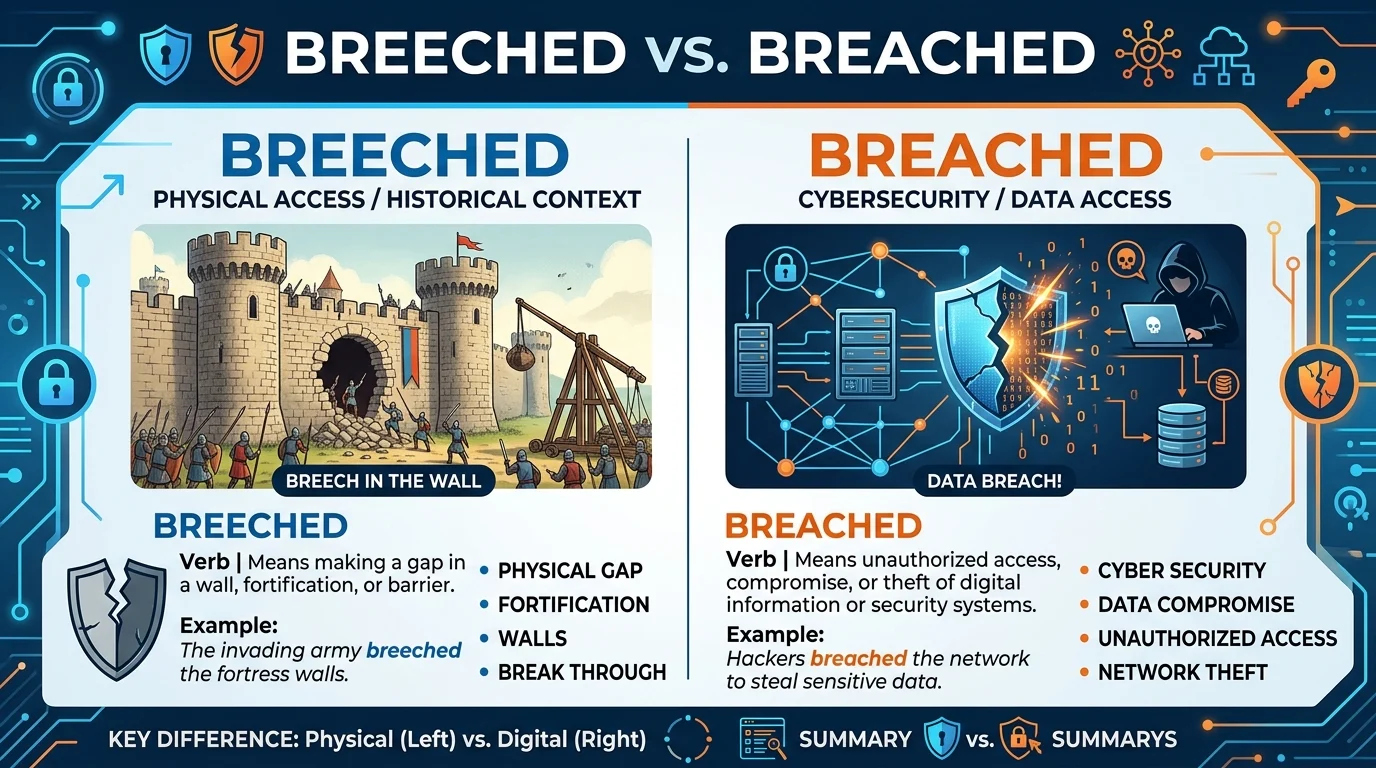
Breeched vs Breached: Main Difference
Here is the easiest way to separate them.
| Word | Meaning | Common Usage |
|---|---|---|
| Breached | Violated or broke through | Very common |
| Breeched | Dressed in breeches or rear-loaded | Rare |
Why Breached Is More Common
Business In modern English, breached appears frequently because it relates to important topics like:
- data breaches
- contract violations
- security failures
- broken agreements
Meanwhile, breeched mainly survives in historical writing or technical discussions.
Common Mistakes People Make
Mistake 1: Using Breeched Instead of Breached
Incorrect:
- “The hackers breeched the database.”
Correct:
- “The hackers breached the database.”
Why? Because the hackers violated security, not fitted something with a breech.
Mistake 2: Confusing Pronunciation
Since both words sound very similar, writers often spell the wrong version by accident.
Mistake 3: Assuming Breeched Is a Modern Business Term
In professional communication, the correct word is almost always breached.
Real Life Examples of Breached
Technology
- User data was reportedly breached during cyberattacks.
Legal Agreements
- The supplier breached the contract terms.
Security
- Unauthorized users breached the building.
Environmental Context
- Stormwater breached the coastal defenses.
Real Life Examples of Breeched
Historical Clothing
Breeches
- Young boys were traditionally breeched after infancy.
Weapons
Cannon
- The breeched cannon improved reload speed.
These uses are uncommon in everyday modern conversation.
American vs British English Differences
Both:
- United States American English
- United Kingdom British English
use the same spellings and meanings:
- breached
- breeched
However, breeched appears more often in historical British literature.
Synonyms for Breached
Using related vocabulary improves readability and SEO relevance.
Synonyms
- violated
- broken
- crossed
- penetrated
- infringed
- disrupted
Example
Instead of:
- “The company breached the rules.”
You could say:
- “The company violated the rules.”
Easy Trick to Remember the Difference
A quick memory tip:
- Breached → think break
- Breeched → think breeches
So:
- break agreement → breached
- wear breeches → breeched
Why Correct Usage Matters
Professional Communication Using the wrong word can create confusion in:
- legal writing
- contracts
- cybersecurity reports
- academic work
- professional communication
Because breached is tied to serious topics like security and law, spelling accuracy is important.
FAQs
Which word is more common: breeched or breached?
Breached is far more common in modern English.
What does breached mean?
It means broken, violated, crossed, or penetrated.
What does breeched mean?
It usually refers to being dressed in breeches or fitted with a breech-loading mechanism.
Is breeched a real word?
Yes. It is a real but uncommon English word.
What is a data breach?
A data breach happens when unauthorized people access protected information.
Is breached used in legal writing?
Yes. It is commonly used in legal and contract-related language.
Do British and American English spell these words differently?
No. Both dialects use the same spellings.
How can I remember the difference quickly?
Think:
- breach = break
- breech = breeches
Final Summary
The difference between breeched vs breached mainly comes down to meaning and modern usage. Breached is the common word used when talking about broken agreements, security violations, barriers, or legal issues. Breeched, on the other hand, is a rare and older term related to breeches or specialized technical contexts.
In most professional, legal, business, or cybersecurity writing, breached is almost always the correct choice. Remembering that breached relates to “breaking” something can help you choose the right word quickly and confidently.
Actionable Takeaway
Before using either word, ask yourself:
- Am I talking about breaking rules, security, or agreements? → Use breached
- Am I discussing breeches or historical clothing? → Use breeched
That quick check will help you avoid confusion every time.