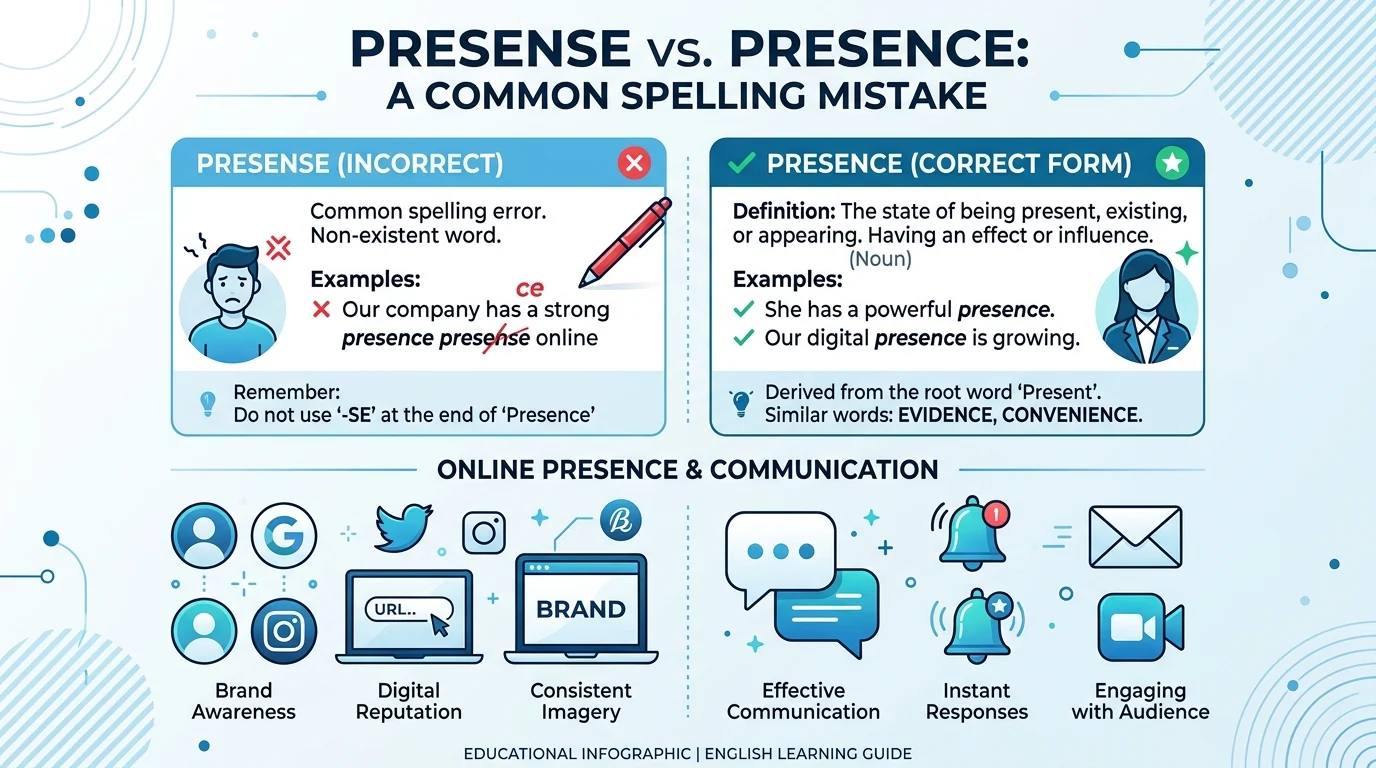
The confusion between presense vs presence is a very common English spelling mistake. Because the words sound almost identical when spoken, many people accidentally write presense instead of the correct spelling presence. However, only one version is accepted in standard English.
If you’ve ever wondered whether to use presense or presence in emails, essays, business writing, social media, or academic work, this guide explains the correct spelling, meanings, examples, pronunciation, grammar tips, and easy memory tricks.
Quick Answer
✅ Presence is the correct spelling.
❌ Presense is incorrect.
Correct example:
- “Her presence made everyone feel comfortable.”
Incorrect example:
- “Her presense made everyone feel comfortable.”
The word presence refers to:
- the state of being somewhere
- someone’s physical or emotional influence
- a noticeable existence or appearance
What Does Presence Mean?
English Vocabulary Presence is a noun commonly used to describe:
- being physically present
- influence or aura
- attendance
- visibility or existence
Examples of Presence
- His presence improved the atmosphere.
- The teacher noticed her absence and presence records.
- The company has a strong online presence.
- A police presence increased safety in the area.
Why “Presense” Is Incorrect
The spelling presense is not recognized in standard English dictionaries.
People commonly make this mistake because:
- presence and sense sound similar
- pronunciation can be misleading
- English spelling patterns are inconsistent
However, the correct spelling is always:
✅ presence
❌ presense
Presense vs Presence: Main Difference
| Word | Status | Meaning |
|---|---|---|
| Presence | Correct spelling | State of being present or noticeable |
| Presense | Incorrect spelling | Common typo |
The Origin of Presence
Linguistics The word presence comes from Latin roots related to:
- being before someone
- appearing
- existing nearby
It is connected to words like:
- present
- presenter
- presentation
Notice they all use:
- “pres”
plus:
- “ence”
Not:
- “sense”
Common Uses of Presence
Business
Business
- Brands need a strong online presence.
Education
Education
- Student presence is required during exams.
Technology
- Professionals build their digital presence online.
Public Safety
United Nations
- Peacekeeping forces maintained a visible presence.
Different Meanings of Presence
Physical Presence
- Her presence in the room changed the mood.
Online Presence
- Businesses invest in social media presence.
Emotional Presence
Psychology
- Good listeners show emotional presence.
Common Mistakes People Make
Mistake 1: Writing “Sense” Instead of “Sence”
Incorrect:
- “Your presense matters.”
Correct:
- “Your presence matters.”
Mistake 2: Spelling by Pronunciation
The spoken sound can make both spellings seem similar.
Mistake 3: Fast Typing Errors
Typing quickly often causes vowel and consonant confusion.
Synonyms for Presence
Using related vocabulary improves readability and writing variety.
Common Synonyms
- existence
- attendance
- appearance
- influence
- visibility
Example
Instead of:
- “Her presence was calming.”
You could say:
- “Her influence was calming.”
Presence in Digital Marketing
Digital Marketing Businesses often discuss:
- online presence
- social media presence
- brand visibility
Example
- Strong online presence helps businesses grow faster.
American vs British English Differences
Both:
- United States American English
- United Kingdom British English
use the same spelling:
✅ presence
❌ presense
There is no regional spelling difference.
Why Correct Spelling Matters
Professional Communication Correct spelling improves:
- professionalism
- readability
- communication clarity
- credibility
Misspellings like presense may make formal writing appear careless.
Easy Trick to Remember the Correct Spelling
A simple memory trick:
Presence Comes From Present
Think:
- present
- presence
- presentation
All use:
- “pres”
plus:
- “ence”
Not:
- “sense”
Related Word Forms
| Word Type | Example |
|---|---|
| Noun | presence |
| Adjective | present |
| Verb | present |
| Noun | presentation |
Example Sentence
- “Her professional presence improved the presentation.”
FAQs
Which spelling is correct: presense or presence?
Presence is the correct spelling.
Is presense a real word?
No. Presense is considered a spelling mistake.
What does presence mean?
It means the state of being present, noticeable, or influential.
Why do people spell presence as presense?
Usually because the pronunciation sounds similar to words ending in “sense.”
Is presence used in business writing?
Yes. It is commonly used in discussions about online and professional presence.
Do British and American English spell presence differently?
No. Both use presence.
What is an online presence?
It refers to visibility and activity on the internet.
Can spell-check detect presense?
Yes. Most spell-check tools suggest presence instead.
Final Summary
The difference between presense vs presence becomes simple once you connect the word to related terms like present and presentation. Presence is the correct standard English spelling meaning the state of being present, noticeable, or influential, while presense is an incorrect spelling caused mainly by pronunciation confusion.
Whenever you write about attendance, influence, visibility, or online branding, always use presence. Remembering its connection to present can help you avoid this common spelling mistake and improve your writing confidence.
Actionable Takeaway
Before writing the word, remember:
- presence = correct spelling
- linked to present and presentation
So:
- presence ✅
- presense ❌
That quick spelling check will help you avoid the mistake every time.