Have you ever typed “suger” instead of “sugar” and wondered which spelling is correct? You’re not alone. This is one of the most common English spelling mistakes because the pronunciation of sugar doesn’t clearly match its spelling.
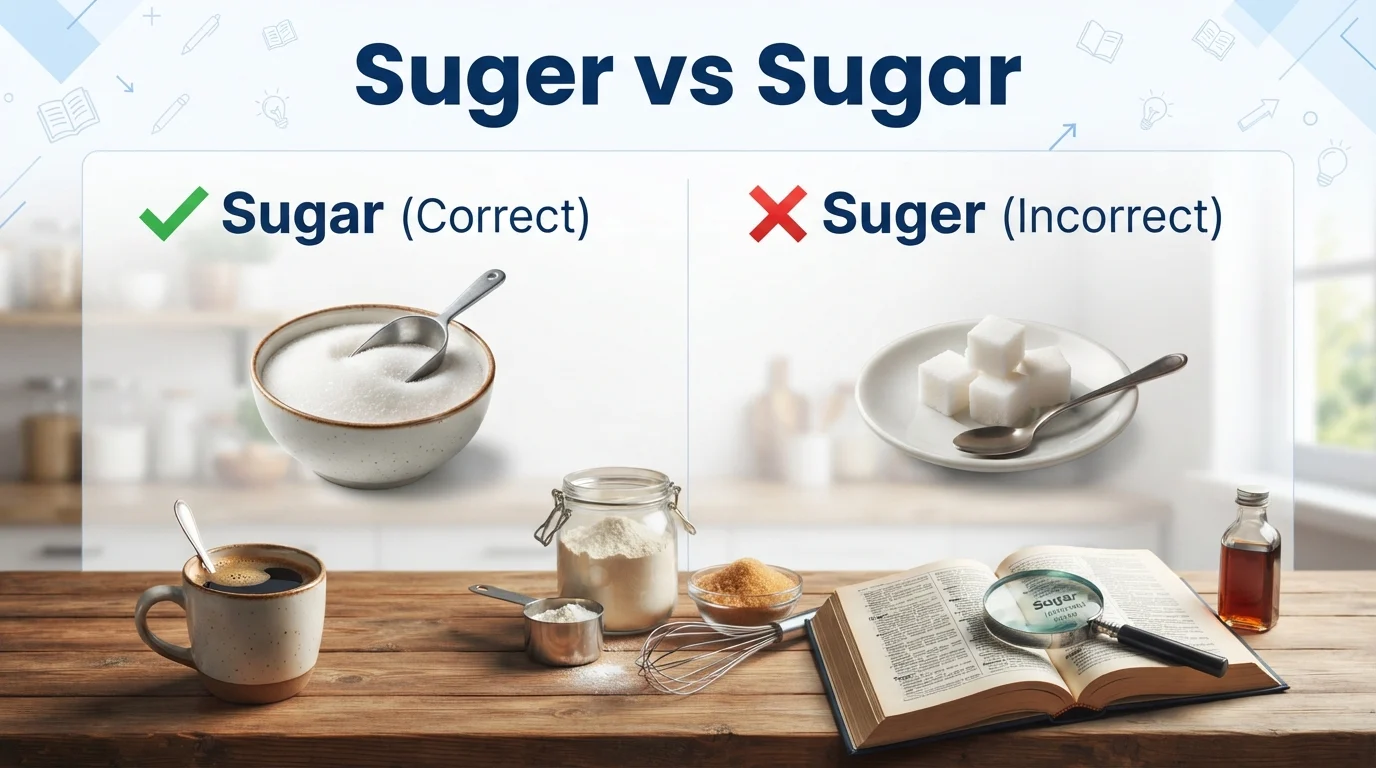
The correct spelling is “sugar.” “Suger” is simply a misspelling and should be avoided in all forms of writing. In this guide, you’ll learn the difference between suger vs sugar, understand the correct spelling, see practical examples, and discover easy tricks to remember it.
Quick Answer
“Sugar” is correct.
“Suger” is incorrect in standard English.
- ✅ Sugar = A sweet substance used in food and drinks or naturally found in fruits and other foods.
- ❌ Suger = A common misspelling of sugar.
Examples:
- ✅ Please add one teaspoon of sugar to my coffee.
- ✅ Too much sugar can affect your health.
- ❌ Please add one teaspoon of suger.
What Does “Sugar” Mean?
Sugar is a noun that refers to a sweet crystalline substance commonly used to sweeten foods and beverages. It also naturally occurs in fruits, vegetables, milk, and many other foods.
The word sugar can also be used informally as a term of endearment.
Examples:
- I prefer brown sugar in my tea.
- This fruit contains natural sugar.
- Thanks for helping me, sugar. (informal and affectionate)
Why “Suger” Is Incorrect
Many people spell sugar as suger because the pronunciation can be misleading. However, standard English dictionaries recognize only sugar.
The correct spelling has remained sugar for centuries and should always be used in academic, professional, and everyday writing.
Suger vs Sugar
| Feature | Suger | Sugar |
|---|---|---|
| Correct spelling | ❌ No | ✅ Yes |
| Standard English | ❌ Incorrect | ✅ Correct |
| Dictionary recognized | ❌ No | ✅ Yes |
| Used in formal writing | ❌ Never | ✅ Yes |
| Used in everyday English | ❌ No | ✅ Yes |
Whenever you’re deciding between suger vs sugar, always choose sugar.
How to Use “Sugar” Correctly
The word sugar appears in many everyday situations.
Food and Drinks
- She added sugar to her coffee.
- This recipe requires one cup of sugar.
- I don’t take sugar in my tea.
Health
- Eating too much sugar may increase the risk of health problems.
- The doctor advised reducing sugar intake.
- Natural sugar is found in many fruits.
Baking
- Mix the flour, butter, and sugar.
- Sprinkle powdered sugar over the cake.
Informal Use
- Thank you, sugar.
- Come here, sugar.
Common Mistakes
Here are mistakes people often make.
Incorrect:
- ❌ suger
- ❌ brown suger
- ❌ low suger diet
- ❌ blood suger level
Correct:
- ✅ sugar
- ✅ brown sugar
- ✅ low-sugar diet
- ✅ blood sugar level
Common Expressions with “Sugar”
You’ll frequently see sugar in these phrases:
- brown sugar
- white sugar
- powdered sugar
- blood sugar
- sugar level
- sugar-free
- sugar rush
- sugar substitute
Examples:
- My blood sugar is normal.
- This drink is sugar-free.
- The cookies are made with brown sugar.
Easy Trick to Remember
A simple memory tip:
Remember the phrase:
Sugar in your coffee.
The word always contains “gar” at the end not “ger.”
Another trick:
Think of the famous saying:
“Sugar and spice.”
Seeing the correct spelling repeatedly makes it easier to remember.
American vs British English
There is no spelling difference between American and British English.
Both use:
- ✅ Sugar
- ❌ Suger
The spelling is identical across all major English-speaking countries.
Related Words
If you’re learning vocabulary related to sugar, you may also encounter:
- sweetener
- glucose
- sucrose
- fructose
- brown sugar
- powdered sugar
- granulated sugar
- sugar-free
- blood sugar
- natural sugar
These related terms are useful in cooking, nutrition, and health discussions.
Tips to Avoid This Mistake
Use these simple strategies:
- Remember that the correct spelling is sugar, not suger.
- Read recipes and food labels to reinforce the correct spelling.
- Use spell-check tools, but also memorize the word.
- Practice writing common phrases like brown sugar and blood sugar.
- Proofread carefully before sending emails or publishing content.
Frequently Asked Questions
Is “suger” a real English word?
No. Suger is a misspelling and is not recognized as a standard English word.
Which is correct: suger or sugar?
Sugar is always the correct spelling.
Why do people spell “sugar” as “suger”?
Because the pronunciation can make the word seem like it should end in -ger, many people accidentally misspell it. However, the correct spelling is sugar.
What does “sugar” mean?
Sugar is a sweet substance used in foods and drinks and naturally found in many plants and fruits.
Is “sugar” a noun?
Yes. Sugar is primarily a noun.
Example:
- Please pass the sugar.
Do American and British English spell “sugar” differently?
No. Both American and British English use sugar.
Can “sugar” be used as a nickname?
Yes. In informal English, sugar can be used as a warm or affectionate term of endearment.
Example:
- Thanks, sugar!
Summary
When comparing suger vs sugar, the correct spelling is always sugar. Suger is a common spelling mistake and should be avoided in all types of writing. Whether you’re talking about baking, nutrition, beverages, or health, sugar is the only accepted form in standard English.
To remember the correct spelling, think of familiar phrases like brown sugar, blood sugar, or sugar-free. Seeing and using the correct form regularly will help you avoid this common error and improve your spelling confidence.
Actionable Takeaway
Before submitting your writing, take a moment to check for “suger.” If you find it, replace it with “sugar.” This simple proofreading habit can instantly improve the accuracy and professionalism of your writing.