Have you ever wondered whether “lovie” or “lovey” is the correct spelling? These affectionate words often appear in text messages, social media posts, greeting cards, and everyday conversations. Because they sound almost identical, many people are unsure which version to use.
The answer depends on the context. “Lovey” is the standard and more widely accepted spelling when used as a term of endearment. “Lovie” is also used, but it is generally considered a less common spelling or a personal nickname rather than the standard form. In this guide, you’ll learn the difference between lovie vs lovey, their meanings, examples, common mistakes, and when to use each one.
Quick Answer
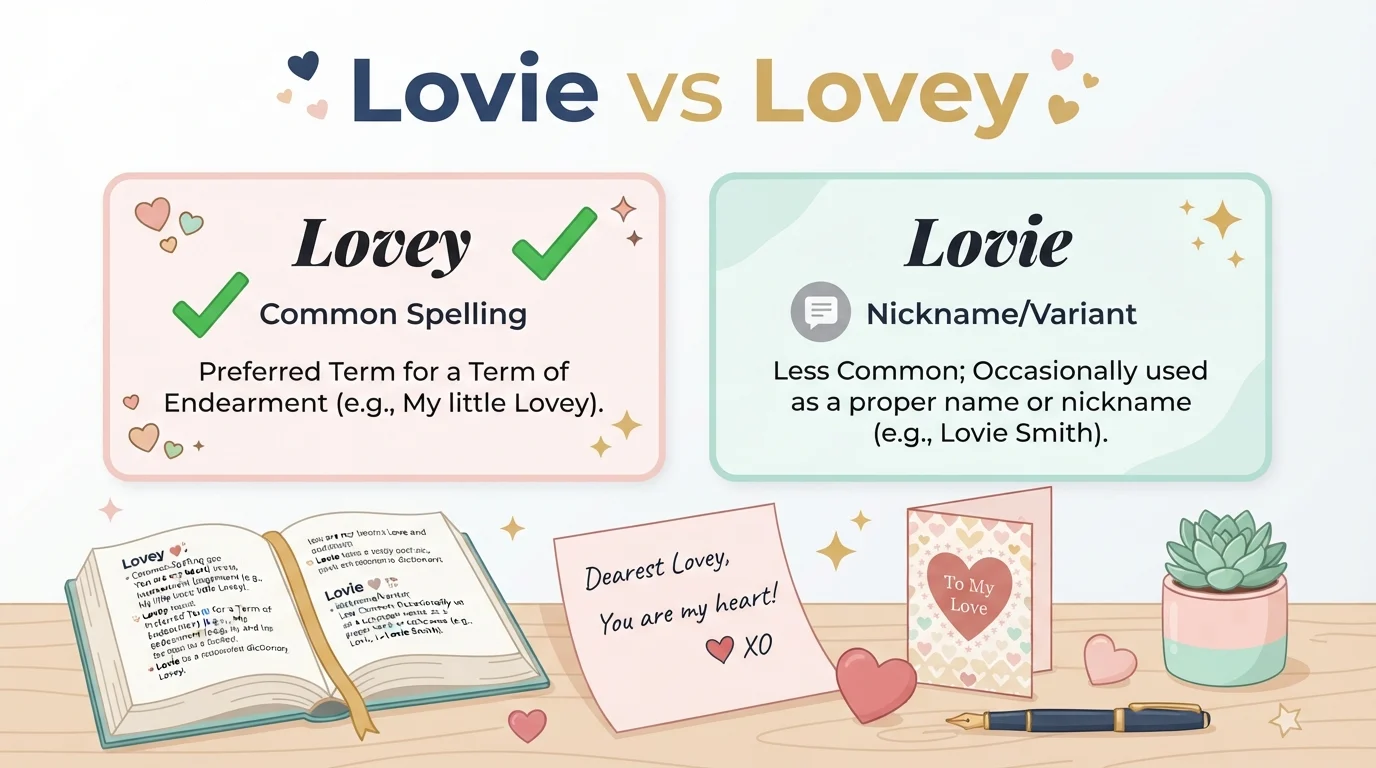
“Lovey” is the standard and most common spelling.
“Lovie” is also used, but mainly as a personal nickname or an alternative spelling.
- ✅ Lovey = A common term of endearment meaning “dear,” “sweetheart,” or “darling.”
- ✅ Lovie = A less common variant, often used as a nickname or personal spelling preference.
Examples:
- ✅ Good morning, lovey!
- ✅ Thanks for the gift, lovey.
- ✅ Everyone calls her Lovie because it’s her family nickname.
What Does “Lovey” Mean?
Lovey is an affectionate noun used to address someone you care about, such as a romantic partner, child, close friend, or family member.
It has the same warm meaning as words like:
- sweetheart
- darling
- dear
- honey
- love
- babe
Examples:
- Good night, lovey.
- How are you feeling today, lovey?
- Come here, lovey.
What Does “Lovie” Mean?
Lovie usually has one of two meanings:
- A personal or family nickname.
- An alternative spelling of lovey, chosen for style or preference.
Although you’ll occasionally see lovie online or in personal messages, it is less common than lovey in standard English.
Examples:
- My grandmother always called me Lovie.
- Lovie is the nickname everyone uses for her.
Lovie vs Lovey
| Feature | Lovie | Lovey |
|---|---|---|
| Standard spelling | ❌ Less common | ✅ Yes |
| Dictionary recognized | ⚠️ Limited use | ✅ Yes |
| Common term of endearment | ⚠️ Sometimes | ✅ Yes |
| Personal nickname | ✅ Yes | ✅ Sometimes |
| Used in everyday writing | ⚠️ Less often | ✅ More often |
If you’re writing for a general audience or using the word as a term of affection, lovey is usually the better choice.
When to Use “Lovey”
Use lovey when you’re affectionately addressing someone.
Examples:
Romantic Relationships
- I missed you, lovey.
- Sleep well, lovey.
Family
- Dinner is ready, lovey.
- Be careful on your way home, lovey.
Friendly Conversation
- You’re doing great, lovey.
- Thanks for helping me, lovey.
When to Use “Lovie”
Use Lovie if:
- It’s someone’s preferred nickname.
- You’re using a personal or family spelling.
- You’re referring to a person whose name or nickname is Lovie.
Examples:
- Everyone knows her as Lovie.
- My aunt has called me Lovie since I was little.
Common Mistakes
People sometimes assume lovie is the standard spelling for everyone.
Incorrect (in most general writing):
- ❌ You’re the best, lovie. (unless it’s your chosen nickname)
Preferred:
- ✅ You’re the best, lovey.
Correct nickname usage:
- ✅ My friends all call me Lovie.
Easy Trick to Remember
A simple memory tip:
Think of lovey as coming from the word love plus the affectionate ending -y, similar to:
- dog → doggy
- duck → ducky
- love → lovey
If you’re simply calling someone “sweetheart,” lovey is usually the safest choice.
American vs British English
Both American English and British English commonly recognize lovey as a term of endearment.
Lovie may also appear in both varieties, but it’s much more likely to be used as:
- a nickname
- a personal spelling choice
- a character name
There is no major regional spelling difference between American and British English for these words.
Related Terms of Endearment
If you’re looking for similar affectionate words, consider:
- sweetheart
- darling
- dear
- honey
- love
- babe
- baby
- angel
- sweetheart
- dearie
These expressions carry similar meanings depending on the relationship and context.
Tips to Choose the Right Word
Keep these tips in mind:
- Use lovey in general writing as a term of affection.
- Use Lovie only if it’s someone’s chosen nickname or preferred spelling.
- Be consistent with whichever form a person prefers.
- Remember that names and nicknames often follow personal preference rather than strict grammar rules.
Frequently Asked Questions
Which is correct: lovie or lovey?
For general use as a term of endearment, lovey is the standard and more widely accepted spelling. Lovie is usually a nickname or personal variation.
Is “lovie” a real word?
Yes. Lovie exists as a nickname and alternative spelling, but it is much less common than lovey.
What does “lovey” mean?
Lovey is an affectionate word meaning sweetheart, dear, or darling.
Can I call my partner “lovie”?
Yes. Many people do, especially if it’s a personal preference. However, lovey is the more common standard spelling.
Is there a difference between American and British English?
No significant difference. Both American and British English generally prefer lovey.
Is “Lovie” used as a name?
Yes. Lovie is sometimes used as a given name or family nickname.
Which spelling should I use in formal writing?
If you’re using the word as a common term of endearment in dialogue or creative writing, lovey is usually the preferred spelling. If referring to a person’s actual nickname or name, use Lovie if that is how they spell it.
Summary
When comparing lovie vs lovey, lovey is the standard spelling and the most common choice when addressing someone affectionately. Lovie is also a real form, but it is generally used as a nickname, personal spelling preference, or proper name rather than the standard term of endearment.
To choose the right word, think about the context. If you’re writing for a broad audience or simply calling someone “sweetheart” or “dear,” lovey is the safest and most widely accepted option. If you’re referring to someone’s chosen nickname or name, Lovie is perfectly appropriate.
Actionable Takeaway
Before using lovie or lovey, consider whether you’re writing a general term of affection or someone’s personal nickname. In most cases, lovey is the correct and more familiar spelling, while Lovie should be reserved for names or individual preference.