The confusion between proceed vs procede is a common English spelling mistake. Because the word is pronounced with a long “ee” sound, many people mistakenly write procede instead of the correct spelling proceed.
If you’ve ever wondered which spelling to use in emails, business communication, academic writing, or everyday conversations, this guide explains the correct spelling, meaning, examples, grammar rules, and easy memory tricks.
Quick Answer
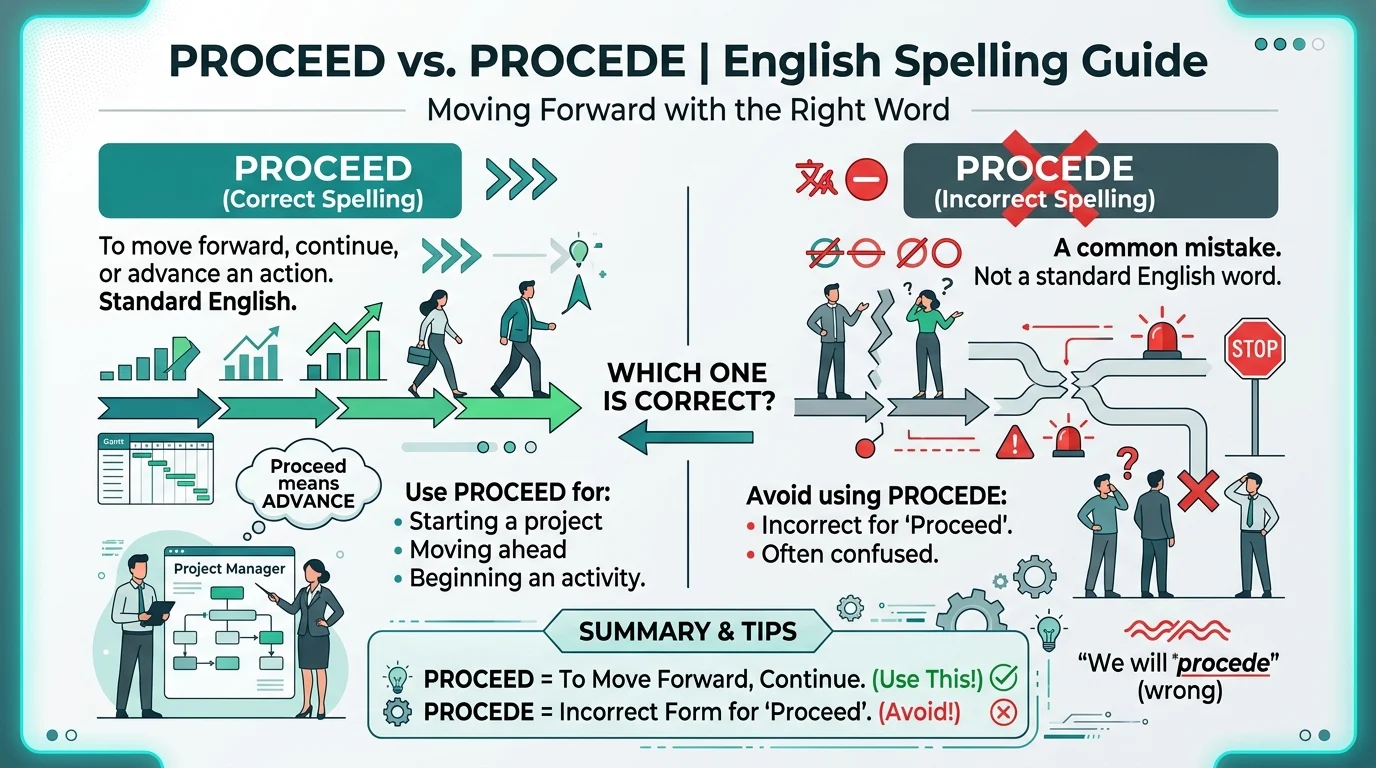
✅ Proceed is the correct spelling.
❌ Procede is incorrect.
Correct example:
- “Please proceed to the next step.”
Incorrect example:
- “Please procede to the next step.”
The word proceed means:
- to continue
- to move forward
- to carry on with an action or process
What Does Proceed Mean?
English Vocabulary Proceed is a verb used when someone:
- continues an activity
- moves forward with a plan
- advances to the next stage
- carries on after a pause
Examples of Proceed
- We can proceed with the meeting.
- Please proceed carefully.
- The project proceeded as planned.
- After the introduction, the speaker proceeded with the presentation.
Why “Procede” Is Incorrect
The spelling procede is not recognized in standard English dictionaries.
People often make this mistake because:
- the word is pronounced with an “ee” sound
- similar words sometimes use a single “e”
- fast typing can omit one letter
However, the correct spelling is always:
✅ proceed
❌ procede
Proceed vs Procede: Main Difference
| Word | Status | Meaning |
|---|---|---|
| Proceed | Correct spelling | To continue or move forward |
| Procede | Incorrect spelling | Common misspelling |
Common Uses of Proceed
Business
Business
- The company decided to proceed with the expansion.
- Managers approved the plan and proceeded immediately.
Education
Education
- Students may proceed to the next section.
- The instructor proceeded with the lesson.
Legal Contexts
Law
- The court decided to proceed with the hearing.
Everyday Communication
- Please proceed when you’re ready.
- We will proceed after lunch.
Verb Forms of Proceed
| Form | Example |
|---|---|
| Base Verb | proceed |
| Third Person Singular | proceeds |
| Past Tense | proceeded |
| Present Participle | proceeding |
Examples
- She proceeds with caution.
- They proceeded without delay.
- We are proceeding according to schedule.
Common Mistakes People Make
Mistake 1: Using One “E”
Incorrect:
- “Let’s procede.”
Correct:
- “Let’s proceed.”
Mistake 2: Confusing Pronunciation With Spelling
Because the word sounds like “pro-seed,” some writers incorrectly simplify the spelling.
Mistake 3: Forgetting the Double “E”
The ending contains:
- ee
Not:
- e
Synonyms for Proceed
Using related vocabulary can improve writing variety.
Common Synonyms
- continue
- advance
- move forward
- carry on
- progress
- go ahead
Example
Instead of:
- “Please proceed.”
You could say:
- “Please continue.”
Proceed vs Process
Many learners confuse these words because they appear in similar situations.
| Word | Meaning |
|---|---|
| Proceed | Continue or move forward |
| Process | A series of actions or steps |
Examples
- We will proceed with the project.
- The hiring process takes several weeks.
American vs British English Differences
Both:
- United States American English
- United Kingdom British English
use the same spelling:
✅ proceed
❌ procede
There is no regional spelling difference.
Why Correct Spelling Matters
Professional Communication Correct spelling improves:
- professionalism
- readability
- credibility
- communication clarity
Misspellings like procede can make emails, reports, and documents appear less polished.
Easy Trick to Remember the Correct Spelling
Think of “Seed”
The word proceed ends with:
- ee
and sounds similar to:
- seed
- need
- feed
Memory tip:
- proceed → move ahead with two “e” letters
Not:
- procede
Related Word Forms
| Word Type | Example |
|---|---|
| Verb | proceed |
| Noun | proceeds |
| Adjective | proceeding (context-dependent) |
| Noun | proceeding |
Example Sentence
- “The meeting proceeded smoothly after the opening remarks.”
FAQs
Which spelling is correct: proceed or procede?
Proceed is the correct spelling.
Is procede a real word?
No. Procede is considered a spelling mistake.
What does proceed mean?
It means to continue, advance, or move forward with an action.
Why does proceed have double “e”?
The standard English spelling uses “ee” at the end of the word.
What is the past tense of proceed?
The past tense is proceeded.
What is the noun form of proceed?
The noun form is proceeds, often meaning money received from a sale or event.
Do British and American English spell proceed differently?
No. Both use proceed.
Can spell-check catch procede?
Yes. Most spell-check tools identify procede as a misspelling and suggest proceed.
Final Summary
The difference between proceed vs procede is straightforward. Proceed is the correct spelling and means to continue, advance, or move forward with an action or process. Procede is simply a misspelling caused by pronunciation confusion or the omission of one “e.”
Whether you’re writing emails, business reports, academic papers, or everyday messages, always use proceed. Remembering the double “ee” ending can help you avoid this common spelling mistake.
Actionable Takeaway
Before using the word, remember:
- proceed = continue or move forward ✅
- procede = incorrect spelling ❌
For professional and everyday writing:
- proceed ✅
- procede ❌
That quick spelling check will help you avoid the mistake every time.