Have you ever wondered whether the past tense of dream should be “dreamed” or “dreamt”? You’re not alone. Both forms are correct, but the one you choose may depend on the type of English you use and the context of your sentence.
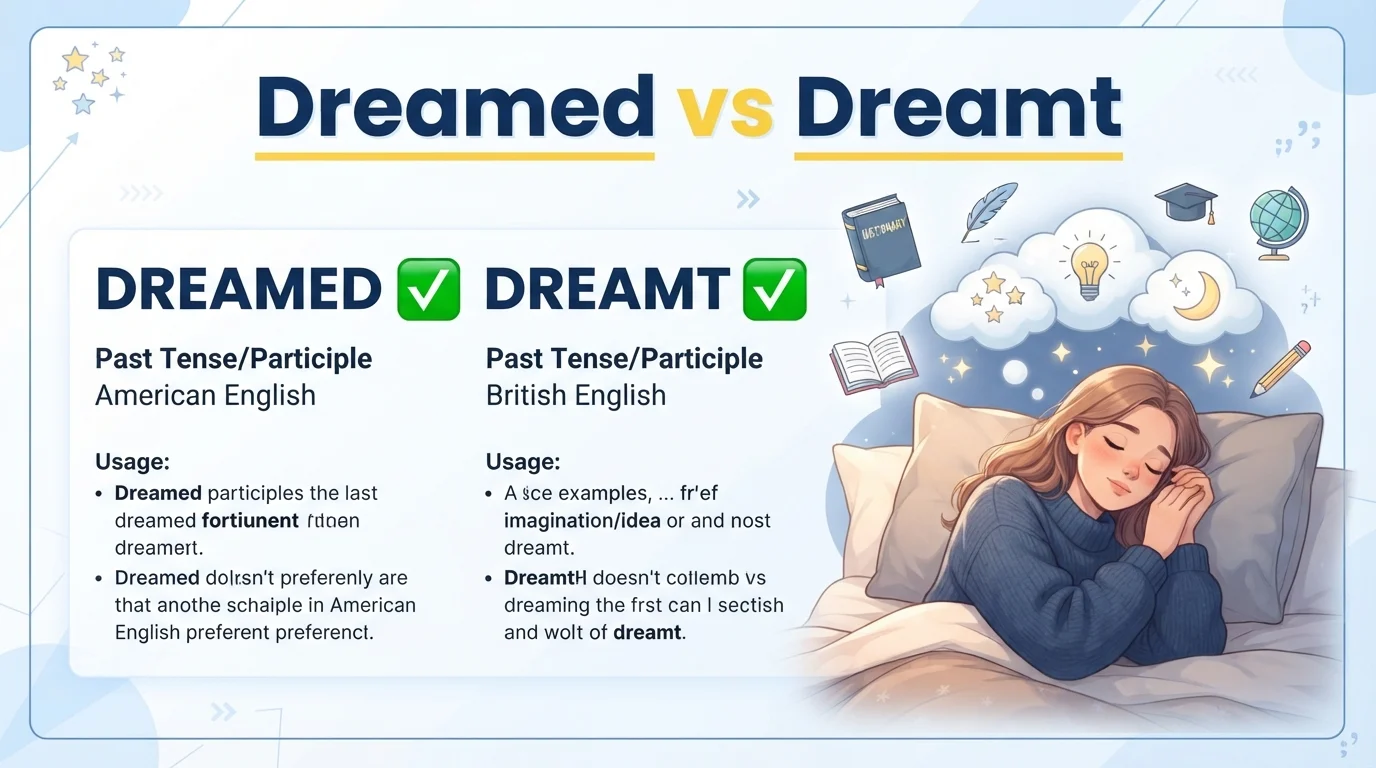
The good news is that dreamed and dreamt both mean the past tense and past participle of dream. Dreamed is more common in American English, while dreamt is especially common in British English and other varieties of English.
In this guide, you’ll learn the difference between dreamed vs dreamt, see clear examples, understand American and British English usage, and learn which form is best for your writing.
Quick Answer
Both dreamed and dreamt are correct.
- Dreamed = The regular past tense of dream.
- Dreamt = An irregular past tense form of dream.
Examples:
- I dreamed about traveling around the world.
- I dreamt about traveling around the world.
Both sentences are grammatically correct.
What Does “Dreamed” Mean?
Dreamed is the regular past tense and past participle of dream.
It can refer to:
- dreams during sleep
- hopes and ambitions
- imagined situations
- goals and aspirations
Examples:
- I dreamed about my childhood last night.
- She dreamed of becoming a doctor.
- We dreamed about building a better future.
- He had always dreamed of visiting Japan.
What Does “Dreamt” Mean?
Dreamt is an alternative past tense and past participle of dream.
It has the same meaning as dreamed.
Examples:
- I dreamt about flying last night.
- She dreamt of becoming a writer.
- He had dreamt of traveling the world.
- They dreamt about their future together.
There is no major difference in meaning between dreamed and dreamt.
Dreamed vs Dreamt
| Form | Meaning | Common Usage |
|---|---|---|
| Dreamed | Past tense of dream | More common in American English |
| Dreamt | Past tense of dream | More common in British English |
Both forms are correct.
The key difference is mainly regional preference and style, not meaning.
How to Use “Dreamed” Correctly
Use dreamed as the past tense of dream.
Examples:
- I dreamed about an old friend.
- She dreamed of owning a house.
- He dreamed that he was flying.
- They dreamed about their future.
Examples with “Dreamed Of”
- She dreamed of becoming a successful artist.
- He dreamed of traveling the world.
- I always dreamed of living near the ocean.
Examples with “Dreamed About”
- I dreamed about my school days.
- She dreamed about winning the competition.
How to Use “Dreamt” Correctly
Use dreamt in exactly the same grammatical situations.
Examples:
- I dreamt about my old home.
- She dreamt of becoming a singer.
- He dreamt that he was flying.
- They had dreamt of this opportunity for years.
American vs British English
This is where the main difference appears.
American English
Dreamed is generally more common in American English.
Example:
- I dreamed about the trip last night.
British English
Dreamt is often more common in British English.
Example:
- I dreamt about the trip last night.
However, dreamed is also completely correct in British English, and dreamt is understood and used in American English.
Common Mistakes
A common mistake is thinking that one form is always wrong.
Incorrect assumption:
- ❌ “Dreamt” is always incorrect.
Actually:
- ✅ Dreamt is correct.
Another incorrect assumption is:
- ❌ “Dreamed” is only American and cannot be used in British English.
Actually:
- ✅ Dreamed is correct in both American and British English.
Which Form Should You Choose?
Choose based on your audience and writing style.
Use “Dreamed” When:
- writing for an American audience
- following American English style
- you prefer regular verb forms
- writing formal or general content
Use “Dreamt” When:
- writing in British English
- using a more traditional or literary style
- your audience commonly uses British English
- you want a shorter, irregular verb form
For most international readers, either form is perfectly understandable.
Easy Trick to Remember
Think of these pairs:
- dream → dreamed
- dream → dreamt
Both are correct.
A helpful pattern is:
American English often prefers “dreamed.”
British English often prefers “dreamt.”
However, this is a preference, not a strict grammar rule.
Related Verb Forms
The main forms of the verb dream are:
- Present: dream
- Past: dreamed / dreamt
- Past participle: dreamed / dreamt
- Present participle: dreaming
Examples:
- I dream every night.
- I dreamed/dreamt last night.
- I have dreamed/dreamt about this moment.
- I am dreaming about my future.
Related Words
Words related to dream include:
- dreamer
- dreaming
- dreamlike
- dreamworld
- aspiration
- ambition
- hope
- goal
- imagination
- vision
These words are useful when discussing sleep dreams or future ambitions.
Tips to Avoid This Mistake
Follow these simple strategies:
- Remember that both dreamed and dreamt are correct.
- Use dreamed if you prefer American English.
- Use dreamt if you prefer British English.
- Keep your usage consistent within the same piece of writing.
- Do not treat one form as a spelling mistake.
Frequently Asked Questions
Which is correct: dreamed or dreamt?
Both dreamed and dreamt are correct past tense and past participle forms of dream.
Is dreamed more common in American English?
Yes. Dreamed is generally more common in American English.
Is dreamt more common in British English?
Yes. Dreamt is often more common in British English and other varieties influenced by British usage.
Can I use dreamt in American English?
Yes. Dreamt is grammatically correct in American English, although dreamed is generally more common.
Can I use dreamed in British English?
Yes. Dreamed is also correct in British English.
Do dreamed and dreamt have different meanings?
No. They generally have the same meaning and grammatical function.
Which form is better for formal writing?
Both are correct. Choose the form that matches your preferred variety of English and remain consistent.
Summary
When comparing dreamed vs dreamt, both words are correct forms of the past tense and past participle of dream. There is no important difference in meaning. The main difference is regional preference: dreamed is more common in American English, while dreamt is often preferred in British English.
The best choice depends on your audience and writing style. If you’re writing in American English, dreamed may sound more natural. If you’re writing in British English, dreamt may be more common. However, both forms are widely understood and grammatically correct.
Actionable Takeaway
Choose dreamed or dreamt based on your preferred English variety, but keep your usage consistent. If you’re unsure, dreamed is a safe and widely accepted choice for international and American English audiences.