Have you ever wondered whether the correct phrase is “per se” or “per say”? You’re not alone. These two expressions sound almost identical, so it’s easy to confuse them when writing. However, only one is the standard expression.
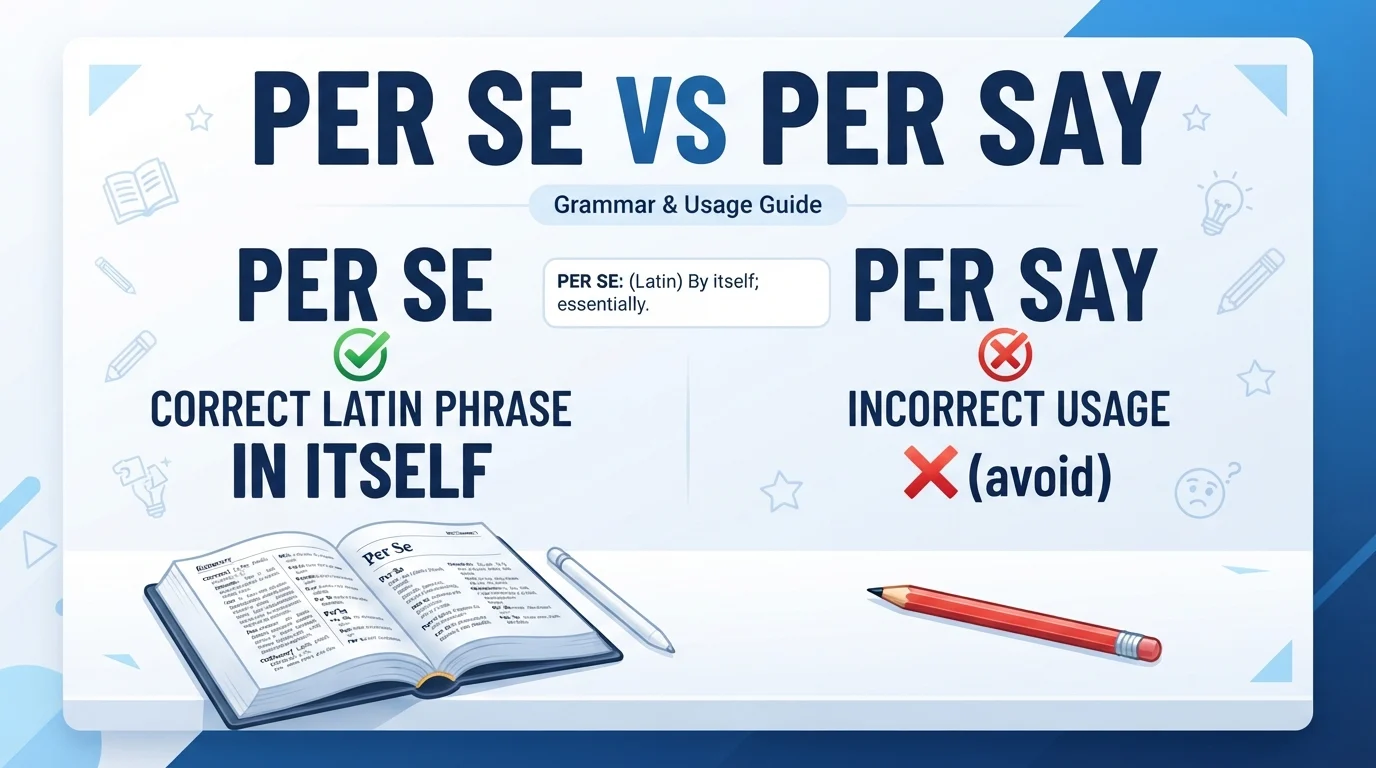
The correct phrase is “per se.” “Per say” is a common spelling mistake. Per se is a Latin phrase meaning “by itself,” “in itself,” or “as such.” This guide explains the difference between per se vs per say, with clear meanings, examples, common mistakes, American and British English usage, and easy tips for remembering the correct spelling.
Quick Answer
Per se is correct.
Per say is incorrect in standard English.
- ✅ Per se = By itself; in itself; intrinsically.
- ❌ Per say = Common misspelling.
Example:
- The job isn’t difficult per se, but it is time-consuming.
- ❌ The job isn’t difficult per say.
What Does “Per Se” Mean?
Per se is a Latin phrase that means:
- by itself
- in itself
- intrinsically
- as such
It is used when you want to focus on something in its essential or specific nature.
Examples:
- The idea isn’t bad per se.
- I don’t dislike the city per se, but I prefer the countryside.
- The rule isn’t unfair per se.
- He isn’t a bad person per se, but he made a serious mistake.
Per Se vs Per Say
| Phrase | Correct? | Meaning |
|---|---|---|
| Per se | ✅ Yes | In itself; by itself |
| Per say | ❌ No | Incorrect spelling |
The simple rule is:
Always write “per se,” not “per say.”
Examples of “Per Se”
- The plan is not impossible per se.
- I don’t hate the idea per se.
- The product isn’t expensive per se, but the additional fees are high.
- She isn’t shy per se; she simply prefers small groups.
- The problem is not the technology per se.
How “Per Se” Is Used in a Sentence
Per se often appears after the noun or idea being discussed.
Common pattern:
[Subject] + is not [adjective] per se, but
Examples:
- The task isn’t difficult per se, but it takes a long time.
- The movie isn’t bad per se, but it is not very exciting.
- The city is not dangerous per se, but some areas should be avoided.
This structure helps make a distinction between something itself and its consequences or surrounding circumstances.
Common Mistakes
The most common mistake is writing per say because the phrase sounds like the English word say.
Incorrect:
- ❌ I don’t dislike the idea per say.
- ❌ The plan isn’t wrong per say.
- ❌ The job isn’t difficult per say.
Correct:
- ✅ I don’t dislike the idea per se.
- ✅ The plan isn’t wrong per se.
- ✅ The job isn’t difficult per se.
Why Is “Per Say” Incorrect?
Per say is not the standard spelling of the expression. The phrase comes from Latin:
per se = by itself / in itself
The word se is not the English verb say. Although the pronunciation can make the phrase confusing, the spelling must remain per se.
American vs British English
Per se is the standard form in both American and British English.
There is no meaningful spelling difference between the two varieties:
- American English: per se
- British English: per se
Per say is considered a misspelling in both standard varieties.
Easy Trick to Remember
Use this memory trick:
Per se = in itself.
You can connect se with the idea of something being considered by itself.
Another helpful reminder:
Per se is Latin, so don’t replace “se” with the English word “say.”
Related Expressions
Similar phrases include:
- in itself
- by itself
- intrinsically
- as such
- essentially
- in its own right
Examples:
- The idea is not bad in itself.
- The product is not expensive as such.
- The problem is not the method intrinsically.
Tips to Avoid This Mistake
Follow these simple strategies:
- Always spell the phrase per se.
- Remember that per se means in itself.
- Do not write per say.
- Use per se when separating something itself from its effects or context.
- Remember that the phrase comes from Latin.
Frequently Asked Questions
Which is correct: per se or per say?
Per se is correct. Per say is a common misspelling.
What does “per se” mean?
Per se means by itself, in itself, or as such.
Is “per say” a word?
No. Per say is not the standard spelling of the expression.
How do you use “per se” in a sentence?
Example: The idea isn’t bad per se, but it needs more development.
Is “per se” formal?
It is somewhat formal and is common in academic, professional, legal, and everyday educated English.
Is “per se” used in American and British English?
Yes. Per se is standard in both American and British English.
What is an alternative to “per se”?
You can use in itself, by itself, as such, or intrinsically, depending on the context.
Summary
When comparing per se vs per say, the correct expression is per se. It is a Latin phrase meaning “by itself,” “in itself,” or “as such.” For example, you might say, “The idea isn’t bad per se, but it could be improved.”
Per say is a common spelling mistake caused by the similar pronunciation of the two expressions. The easiest way to remember the correct spelling is to connect per se with its meaning: per se = in itself.
Actionable Takeaway
Whenever you mean “in itself” or “by itself,” use per se. Remember: per se = correct; per say = incorrect.